Honoring Life, Embracing Memories

Tag: how other cultures deal with death

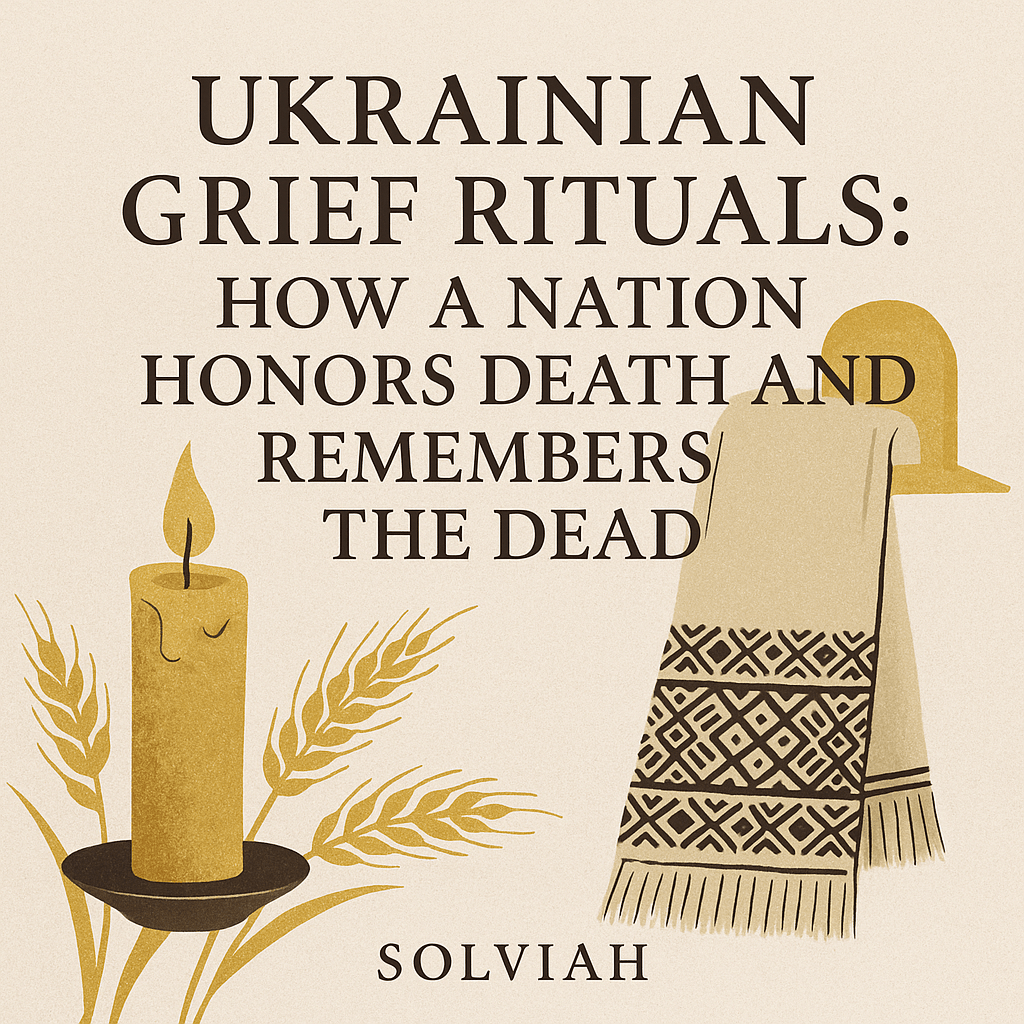
  • Ukrainian Grief Rituals: How a Nation Honors Death and Remembers the Dead

    Ukrainian Grief Rituals: How a Nation Honors Death and Remembers the Dead

    “The soul does not die; it just changes its house.”
    — Ukrainian proverb

    🕯️ A Candle in the Window

    In a small apartment overlooking the golden domes of Lviv, a grandmother ties a black headscarf under her chin. The air smells of beeswax and dill. A single candle flickers by the window—its light a beacon for the soul of her departed son, lost to war. Beside her, a child stirs honey into a bowl of kutia. The forty-day vigil has begun.

    This is not just mourning. This is memory as resistance. This is grief woven into ritual.

    ↑ Back to top


    🌾 Mourning the Ukrainian Way

    Ukraine’s grief traditions blend Orthodox Christianity, pre-Christian folklore, and family-based practices into a slow, reverent process. Death is not abrupt—it is a passage, and the soul must be cared for and remembered.

    Grief unfolds through all five senses in Ukraine:

    • Winter funerals: often take place in frozen soil, where mourners stamp their boots in silence.
    • Summer burials: may involve open-air memorials with blooming wildflowers laid across fresh graves.
    • Food: comforts the living and honors the dead. Kutia—sweet, nutty, and laced with symbolism—is always the first dish served (Pavlyshyn, 2021).

    Every element—from embroidered rushnyk cloths draped over icons to the solemn ring of church bells—grounds the experience of loss in culture and continuity.

    ↑ Back to top


    🧵 Traditional Mourning Practices

    What the Body Wears: The deceased is dressed in their best clothes—often white or embroidered, symbolizing purity. Women mourners wear dark clothing and a black kerchief for up to a year. Jewelry and bright colors are avoided out of respect.

    Funeral Rites: A priest offers the Panakhyda (memorial service), reciting Psalms and prayers (Wikipedia, n.d.). The body may remain in the home for up to three days with mirrors covered and candles burning beside the coffin. At the grave, earth is placed in the sign of the cross on the casket before final prayers.

    Memorial Meals – Pomynky: After burial, families gather to share ritual foods like kutia, cabbage rolls, rye bread, and vodka. Additional meals and prayers are held on the 3rd, 9th, and 40th days (Wikipedia, n.d.).

    ↑ Back to top


    ⏳ The Forty Days

    In Orthodox belief, the soul wanders Earth for forty days after death:

    • On Day 3: The soul is shown Heaven.
    • On Day 9: It sees the torments of Hell.
    • On Day 40: It stands before the throne of judgment (Wikipedia, n.d.).

    But the forty days are not just theological. They are emotional. Candles are lit every evening. A rushnyk cloth may be placed near a photo of the deceased. Children watch. Elders repeat. And slowly, grief begins to find shape.

    ↑ Back to top


    🫂 Communal Grief and Collective Memory

    To grieve in Ukraine today is to do so not alone, but as part of a people who understand loss as shared history. When a child loses a parent to war, the village mourns. When a soldier is buried, strangers attend. When air raid sirens pierce a funeral, mourners hold hands and keep praying.

    In Kyiv, walls bear the faces of fallen heroes (Kulyk, 2020). In the Hutsul highlands, the “Provody” tradition continues—centuries-old and now revived during war (The Guardian, 2024). Along highways, communities kneel to honor passing funeral processions (War.ukraine.ua, 2023). These are not customs. They are collective acts of dignity and memory.

    ↑ Back to top

    From collective mourning to personal support, the next section explores how we can stand beside those grieving across cultures.

    🤝 For Supporters and Friends

    Grief makes many feel unsure of what to say. Silence can feel safer—but also like abandonment. Instead, offer presence, understanding, and respect for Ukrainian mourning customs (INTO, 2019).

    What You Can Say:

    • “I lit a candle for them today.”
    • “Would you like to share a memory?”
    • “Is there a ritual I can honor with you?”

    What to Avoid:

    • “They’re in a better place now.”
    • “Everything happens for a reason.”
    • “At least they died for something.”

    Other Gestures: Bring symbolic food. Offer to help mark the 40th day. Say their name weeks later. Presence often matters more than words.

    ↑ Back to top


    ⚖️ Comparison with Western Traditions

    Aspect Ukraine Western Traditions
    Mourning Period 40 days + annual rituals 1 week or less
    Food Traditions Kutia, pomynky feasts Buffets or potlucks
    Public Grief High—community kneeling, murals Often private

    ↑ Back to top


    🪞 What Ukraine Teaches Us

    Ukraine shows us that grief is not a detour from life—it is a sacred road through it. Rituals remind us:

    • Love does not vanish with death.
    • Memory is a collective inheritance.
    • Grief can be slow, beautiful, and shared.

    Reflection Prompt: Have you ever participated in a grief ritual that felt deeply healing—or one that left you wanting more? Share your story in the comments—we’d be honored to learn from you.

    ↑ Back to top


    📚 Glossary

    • Kutia: Sweet wheat-based funeral dish.
    • Pomynky: Communal meal after a funeral.
    • Radonitsa: Joyful remembrance day held at cemeteries in spring.
    • Panakhyda: Orthodox memorial service for the dead.
    • Rushnyk: Traditional embroidered cloth used in rites of passage.

    ↑ Back to top


    🔗 References

    • Hrytsak, Y. (2019). Historical memory and mourning rituals in Ukraine.
    • Kulyk, V. (2020). Public mourning and national identity in Ukraine.
    • Pavlyshyn, M. (2021). Food and funeral: Ukrainian rituals of remembrance.
    • Wikipedia. (n.d.). Memorial service in the Eastern Orthodox Church.
    • War.ukraine.ua. (2023). How Ukraine honors its fallen defenders.
    • The Guardian. (2024). The Hutsul “Provody”.
    • INTO. (2019). Supporting young people and children from Ukraine.
    ↑ Back to top

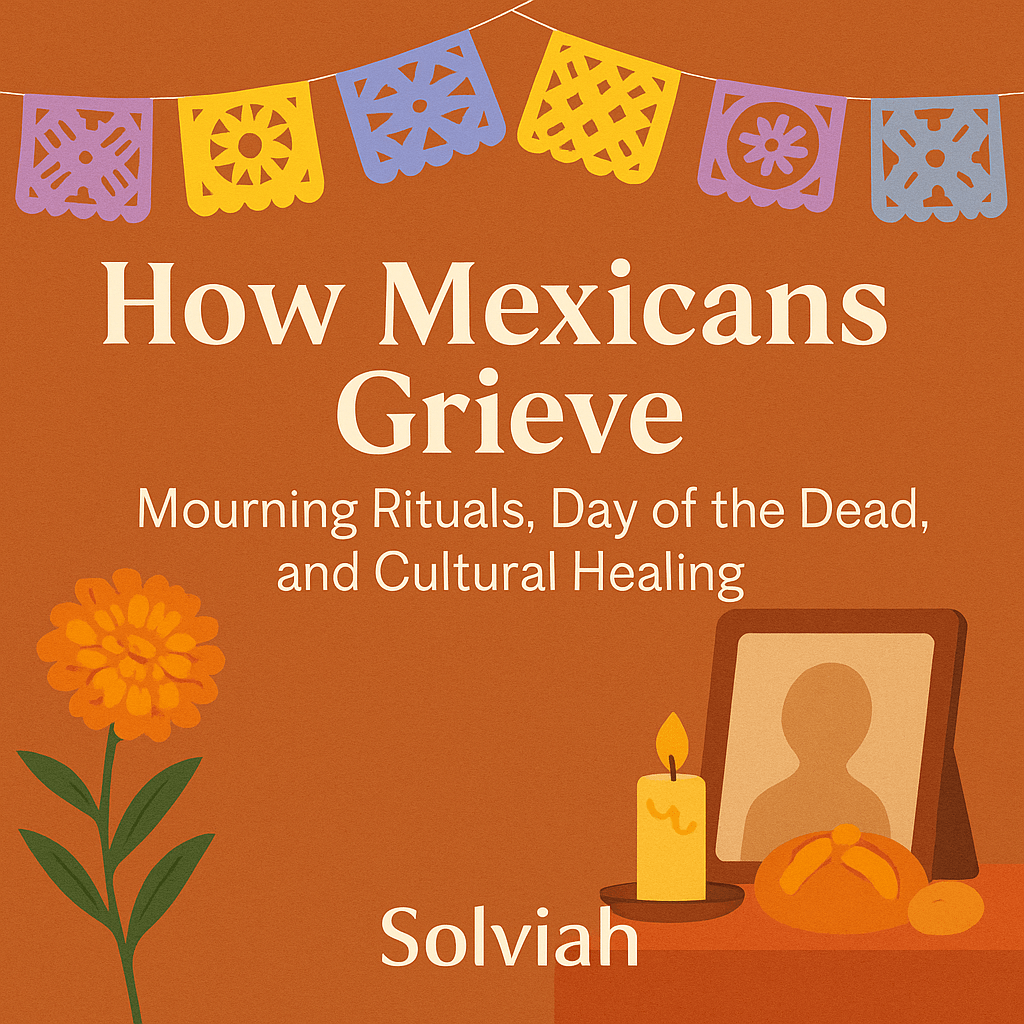
  • How Mexicans Grieve: Mourning Rituals, Day of the Dead, and Cultural Healing

    How Mexicans Grieve: Mourning Rituals, Day of the Dead, and Cultural Healing

    “They tried to bury us. They didn’t know we were seeds.” – Mexican Proverb

    Roots in Life and Legacy

    Mexico’s relationship with death comes from a deeply spiritual blend of pre-Columbian and Catholic beliefs. Long before the Spanish arrived, Aztecs, Mayans, Zapotecs, and other Indigenous peoples believed death was merely another stage of life. The goddess Mictecacihuatl ruled over the afterlife, safeguarding ancestors and ensuring they could revisit the living world once a year.

    Today, the Day of the Dead (Día de los Muertos) carries this ancient worldview into modern life. Families believe ancestors return, guided by trails of marigolds (cempasúchil), the flower whose scent leads spirits home.

    ↑ Back to Top

    What Grief Feels Like in Mexico

    Late October weather in Mexico is crisp and inviting, cooling evenings offset by warm, vibrant days. At home, families prepare pan de muerto, spicy tamales, cinnamon-laced atole, and complex mole sauces—a flavorful tribute to the complexity of grief itself.

    Colorful paper banners (papel picado) flutter in cemeteries. Candles and marigolds guide spirits, while mariachi music echoes familiar songs of remembrance. Grief in Mexico is felt, seen, tasted, and shared.

    ↑ Back to Top

    Diverse Traditions Across Mexico

    From the candlelit cemeteries of Oaxaca to the urban neighborhoods of Mexico City, traditions vary widely. Indigenous Zapotec communities may hold all-night vigils filled with prayer, while modern families create elaborate ofrendas with photos, food, and personal items.

    Formal mourning can last nine to forty days. Women may wear black or traditional embroidered huipiles, and remembrance culminates annually on Día de los Muertos—a day of reunion, not separation.

    ↑ Back to Top

    Communal Grief: Shared Stories and Healing Together

    During a velorio (wake), homes fill with neighbors offering prayers, tamales, and presence. People cry, laugh, share stories, and honor the person’s life in community. Humor softens pain—through stories, memories, and calaveras literarias, witty poetic tributes to the dead.

    Grief in Mexico is not meant to be carried alone.

    ↑ Back to Top

    The Mexican Way vs. Western Mourning

    Where Western cultures often silence grief, Mexico gives it music, ritual, and space. Funerals aren’t just endings—they’re invitations to keep remembering. Rather than moving on, Mexicans move forward with their loved ones in memory.

    Grief here evolves into relationship—not resolution.

    ↑ Back to Top

    A Glimpse Inside: An Evening of Remembrance

    Inside a family home, a glowing altar holds photos, favorite snacks, marigolds, and handwritten notes. Children place sugar skulls beside glasses of water. A soft hymn plays, and the air is thick with memory.

    Guests are greeted with warmth. Everyone is welcome. Grief is witnessed, not rushed.

    ↑ Back to Top

    A Personal Story of Grief

    Gardenia Rangel, a Mexican-American woman, shared her experience of honoring her parents who both passed away from COVID-19. She keeps their memory alive by maintaining an altar in her home adorned with their wedding portrait, electric candles, and mariachi music they loved. “I think about them every single day,” Rangel said. “But I never want to stop missing them because they say that people only die the day you forget them.” This personal ritual exemplifies how Mexican traditions provide comfort and a continuous connection to loved ones who have passed. Source

    ↑ Back to Top

    Anthropological Insights

    Dr. Beatriz Reyes-Foster, an anthropologist specializing in Mexican cultural practices, emphasizes the importance of Día de los Muertos in maintaining family bonds and cultural identity. She notes that the celebration allows for a communal space where grief is expressed openly and joyfully, reinforcing the idea that death is a natural part of life. This perspective challenges Western notions of mourning and highlights the value of embracing death as a continuation of relationships rather than an end. Source

    ↑ Back to Top

    If You’re Mexican and Grieving

    Your traditions are sacred. If those around you don’t understand, know that your grief matters deeply. You carry centuries of wisdom—grief through food, music, and memory. Your way of remembering is powerful, beautiful, and healing.

    We honor you, your loved ones, and the stories you keep alive.

    ↑ Back to Top

    For Non-Mexican Readers: How You Can Support

    • Be present. Offer help, meals, and listening ears.
    • Learn key phrases. Say “Te acompaño en tu dolor” — “I’m with you in your sorrow.”
    • Respect traditions. Ask questions, and participate if invited to rituals.
    • Be aware of sacred timing. Understand that grief resurfaces every year around Día de los Muertos.

    Your humility can become someone else’s comfort.

    ↑ Back to Top

    Reflection: What Mexico Teaches Us About Grief

    Mexico teaches us that grief isn’t meant to be erased. It is an invitation—to remember, to honor, and to reconnect. In embracing both joy and loss, we find that healing doesn’t come from forgetting, but from remembering together.

    ↑ Back to Top

    Share Your Experience

    Have you experienced a grief tradition that touched your heart? Or supported someone from another culture through loss?

    We invite you to reflect or journal:

    • How do I keep my loved ones alive in memory?
    • What can I learn from cultures that grieve differently?
    • Who around me might need my support today?

    Share your thoughts in the comments below.

    ↑ Back to Top

    Glossary

    • Día de los Muertos: A Mexican holiday honoring the dead with altars, offerings, and celebration.
    • Ofrenda: A home altar with food, photos, candles, and personal mementos for the deceased.
    • Cempasúchil: Bright orange marigold flowers believed to guide spirits home.
    • Velorio: A wake or prayer vigil before the funeral.
    • Papel Picado: Colorful cut-paper banners symbolizing the fragility of life.
    • Huipil: Traditional embroidered blouse worn by Indigenous women.
    • Calaveras Literarias: Humorous poems honoring the dead, often shared during Day of the Dead.

    ↑ Back to Top

    References

    • Brandes, S. (1998). The Day of the Dead, Halloween, and the quest for Mexican national identity. Journal of American Folklore, 111(442), 359-380.
    • Lomnitz, C. (2005). Death and the Idea of Mexico. Zone Books.
    • García, A. (2010). The Pastoral Clinic: Addiction and Dispossession Along the Rio Grande. University of California Press.
    • AfterTalk. (2021). Day of the Dead and Mexican-American funeral service rituals. Retrieved from AfterTalk.com
    • Orange County Library System. (2022). Día de los Muertos: Q&A with Dr. Beatriz Reyes-Foster. Retrieved from ocls.org

    ↑ Back to Top


  • Grieving in Canada: Culturally Sensitive Funeral Traditions, Mourning Rituals, and the Journey Through Snow and Song

    Grieving in Canada: Culturally Sensitive Funeral Traditions, Mourning Rituals, and the Journey Through Snow and Song


    “When the drumbeat stops, the spirit walks on.”

    — Haudenosaunee (Iroquois) Proverb

    Across Canada’s vast, snowy landscapes, death is not seen as an ending, but as a continuation — a step into a living memory that shapes those left behind.

    To grieve in Canada is to feel the cold air bite your cheeks, to wrap grief in warmth and ceremony, and to honor the unbroken thread between the living and the dead.


    A Winter’s Mourning: A Sensory Journey ❄️

    Picture this:

    The snow crunches underfoot as mourners gather around a firepit near a longhouse. Their breath curls into the icy air. A woman wearing a hand-beaded shawl carefully adds cedar to the fire, its sweet smoke spiraling skyward. Nearby, elders ladle venison stew into wooden bowls, the rich aroma mingling with the crispness of the winter wind.

    Someone begins to drum — slowly, steadily — and the gathering hums with a sound older than memory. Here, mourning is not silence. It is story. It is song. It is survival.

    🔝 Back to Top


    Mourning Rituals in Canada: Clothing, Foods, Seasons, and Sacred Space

    Indigenous Traditions: Grieving With the Land

    For many Indigenous Canadians, mourning honors not just the person lost but the land they return to.

    • Clothing: Handmade garments adorned with shells, beadwork, and spiritual symbols.
    • Food: Bannock, smoked meats, berries, and cedar tea nourish body and spirit alike.
    • Seasons: Winter burials may be delayed, with ceremonies unfolding when the earth softens.

    “We live in cycles. Death is part of that circle. We mourn, we remember, and then we walk with our ancestors inside us.”

    — Louise McDonald, Cree Elder

    Large communal events like the Feast of the Dead (Wikipedia Contributors) strengthen the bond between generations.


    French-Canadian Mourning: Faith, Family, and Familiarity

    In Québec, Catholic traditions blend with resilient warmth:

    • Wakes: Two days of prayer, stories, and shared meals in homes or parlors.
    • Foods: Tourtière (savory meat pie), maple treats, hearty soups.
    • Emotion: Open weeping and laughter are both welcome, affirming life’s bittersweetness.

    Multicultural Mourning Across Modern Canada

    Today’s Canada embraces traditions from across the world:

    • Indian-Canadian families honor loved ones with marigold garlands and cremation ceremonies.
    • Caribbean-Canadians celebrate vibrant Nine-Night wakes with music and food.
    • Chinese-Canadians offer incense, fruits, and whispered prayers to ancestors.

    🌿 Learn more about emotional healing after loss.

    🔝 Back to Top


    Communal Grieving in Canada: Weathering Loss Together

    In Canada, grief is held collectively, like logs stacked together to keep the fire burning through winter.

    Indigenous Sała ceremonies (U’mista Cultural Society) gather entire villages for drumming, dance, and storytelling. In cities, multicultural memorials blend traditions, creating tapestries of prayer, song, and comfort.

    🤝 Supporting a grieving friend? Find resources here.

    🔝 Back to Top


    Comparing Mourning: Canada and Western Traditions

    Unlike Western funerals often limited to short ceremonies, Canadian mourning stretches into seasons, blending ritual, food, memory, and music. Here, grief is honored in all its forms — a dance of silence, storytelling, and remembrance.

    🔝 Back to Top


    Reflection: What Canadian Mourning Traditions Teach Us 🌿

    From the heavy stillness of winter air to the vibrant dance of multicultural celebrations, Canada teaches that:

    • Grief is a season, not a sentence.
    • Memory is not a weight — it is a torch.
    • The soul continues — through every shared story and act of remembrance.

    When the drumbeat stops, the spirit does not disappear.
    It walks onward — carried in our kindness, our songs, and the gentle footsteps we take in their honor.

    🔝 Back to Top


    Join Our Healing Circle 🌟

    We invite you to share your own experiences with mourning traditions, seasonal memories, or reflections below.

    Tell us about a song, a meal, a gathering — a moment when memory carried you forward.
    Your story could become someone else’s light in the snow.

    🔝 Back to Top


    Glossary 📖

    Term Meaning
    Feast of the Dead Huron-Wendat communal reburial ceremony honoring ancestors.
    Sała Ceremony Kwakwaka’wakw mourning gathering with storytelling and dance.
    Nine-Night Caribbean mourning tradition spanning nine nights of remembrance.
    Tourtière French-Canadian savory meat pie, common at wakes and celebrations.

    🔝 Back to Top


    References 🔖

    • Earle Waugh. (2010). Funeral Practices in Canada. The Canadian Encyclopedia.
    • St. John’s Dixie Cemetery. (n.d.). Canadian Funeral Customs and Traditions.
    • Wikipedia contributors. (n.d.). Huron Feast of the Dead. Wikipedia.
    • Louise McDonald, Cree Elder. (n.d.). Personal commentary.

    🕯️ Part of the Solviah Reflection Series 🕯️

  • Brazilian Mourning Rituals: A Deep Guide to Grieving, Healing, and Honoring Life

    Brazilian Mourning Rituals: A Deep Guide to Grieving, Healing, and Honoring Life

    “A saudade é o amor que fica.”

    — Brazilian Proverb

    In Brazil, love does not end at death. It lingers—like a favorite song, a familiar scent, a warm breeze—both invisible and profoundly present. This enduring connection is encapsulated in the concept of saudade, a deep emotional longing for someone beloved yet absent (1).

    Funeral traditions throughout Brazil honor this truth: death is not disappearance, but transformation. Understanding how other cultures deal with death invites us to rethink our own journeys through grief with greater openness, tenderness, and resilience.


    Table of Contents


    Mourning Rituals in Brazil

    Before exploring ceremonies of remembrance, we first step into the tender, time-honored rituals shaping Brazilian mourning.

    Clothing and Symbols

    Brazilian funerary customs embody a rich tapestry of Catholic, Afro-Brazilian, Indigenous, and secular traditions (2). Typically, mourners wear black to signify solemnity and respect. However, in many Afro-Brazilian practices, white garments symbolize purity, peace, and spiritual passage (3).

    Tokens of remembrance—rosaries, medals of saints, fresh white flowers—are commonly placed with the deceased, reflecting both religious devotion and cultural continuity (2,4). In rural areas, widows may wear black for extended periods, sometimes up to a full year, symbolizing their enduring love and devotion (5).

    Food and Fellowship

    Communal meals play an important role in Brazilian mourning practices. After funeral services, families and friends gather for simple, nourishing foods such as strong coffee, fresh bread, cassava dishes, and regional favorites like pão de queijo (6). These gatherings foster connection, allowing collective grief to be expressed openly through conversation, prayer, and song.

    Mourning Time Frames

    • Velório (Wake): Held within 24 hours after death, featuring prayer, hymns, storytelling, and overnight presence (2,7).
    • Burial: Occurs the following day with religious and cultural rites.
    • Novenas: Nine consecutive days of prayer for the soul’s peace and passage (7).
    • Missa de Sétimo Dia: The Seventh Day Mass marks a communal step in mourning and remembrance (7).
    • Annual Memorials: Families frequently hold Masses and gatherings on death anniversaries to sustain the memory of the loved one (2).

    Each rite threads sorrow into hope, reinforcing that grief, like love, continues evolving beyond the grave.

    ⬆️ Back to Top


    Communal Grieving and Emotional Impact

    In Brazil, grief is a public, sacred act. It breathes openly through embraces, prayers, and communal presence.

    At a velório (wake), tears flow freely. Friends, neighbors, and extended family gather quickly—often without formal invitation—to surround the bereaved family with solidarity (8). Open emotional expression, whether weeping, singing, or heartfelt storytelling, is both natural and culturally encouraged (9).

    Children are usually included at wakes and funerals, learning that mourning is an act of love rather than something to fear (8). The communal aspect of grieving offers powerful emotional relief, reducing isolation and reinforcing collective strength.

    Common condolences spoken at funerals include:

    • “Meus sentimentos.” (My condolences.)
    • “Sinto muito pela sua perda.” (I am sorry for your loss.)

    It is not eloquent words that heal, but shared presence—shoulder to shoulder, tear to tear.

    ⬆️ Back to Top


    Traveling to Brazil for a Funeral

    Called across oceans or continents to say goodbye? Understanding Brazilian mourning customs ensures you arrive in both heart and spirit.

    TimingFunerals typically occur within 24–48 hours of death. Swift travel is essential (10).
    Dress CodeWear modest black or white clothing. Avoid flashy jewelry or bright colors (11).
    BehaviorEmotional expression is expected. Crying, hugging, or even sobbing is seen as an act of love (8).
    CondolencesSimple, heartfelt phrases like “Meus sentimentos” are appropriate (8).
    GiftsSimple white floral arrangements are welcome offerings (11).

    Even if arriving after burial, attending the Missa de Sétimo Dia (Seventh Day Mass) offers an opportunity to honor the deceased and show profound support to the grieving family (7).

    ⬆️ Back to Top


    Planning a Funeral for a Brazilian Loved One

    In Brazil, planning a funeral is an act of immediate love and reverence. 🌿

    • Timing: Funerals typically happen within 24–48 hours; rapid arrangements are critical (10).
    • Funerária Coordination: Funeral homes handle caskets, transportation, permits, and church services (10).
    • Religious Observances: Even secular families often hold Catholic Masses out of cultural respect (12).
    • Gatherings: Post-burial meals focus on fellowship rather than formality—coffee, bread, and prayer (6).
    • Ongoing Remembrance: Planning a Missa de Sétimo Dia and annual Masses sustains the legacy of love (7).

    Brazilian funerals emphasize presence over perfection. The rituals are not performances—they are bridges to remembrance, healing, and hope.

    ⬆️ Back to Top


    Ways Brazilians Honor Their Deceased

    In Brazil, remembrance is not reserved for anniversaries alone. Memory is woven into the fabric of daily life.

    • Novenas: Nine days of prayer to honor and assist the soul’s journey (7).
    • Missa de Sétimo Dia: A Seventh Day Mass to gather the community in shared remembrance (7).
    • All Souls’ Day (Dia de Finados): On November 2nd, families visit cemeteries, light candles, and decorate graves (13).
    • Memory Tables: Small altars with candles, photographs, and symbolic objects displayed at wakes or homes (14).
    • Storytelling: Regular retelling of stories during family gatherings keeps the spirit of the deceased present (8).

    Through ritual, prayer, and storytelling, Brazilians ensure that those who have departed continue to shape the lives of those who remain.

    ⬆️ Back to Top


    Comparison With Western Traditions

    Though grief is universal, cultural responses to death shape how mourning unfolds. Brazil’s rituals offer contrasts—and insights—when compared with Western practices.

    AspectBrazilUnited States/United Kingdom
    TimingBurial typically within 24–48 hours (10)Burial or cremation within 3–7 days
    Emotional ExpressionOpen and communal mourning (8)Often private and restrained mourning
    Child InvolvementChildren commonly included in ceremonies (8)Children often shielded from mourning rituals
    Religious InfluenceCatholic, Afro-Brazilian, Indigenous blends (2,3)Primarily Christian, secular, or multicultural
    Ongoing RemembranceNovenas, annual Masses, All Souls’ Day observances (7,13)Occasional memorials; less structured ongoing rituals

    Brazilian mourning traditions teach that grief can be softened—not by solitude, but by shared memory, ongoing ritual, and community presence (8).

    ⬆️ Back to Top


    Reflection: What Brazil Teaches Us About Grief

    Grief, when embraced communally, transforms into something enduring, sacred, and tender.

    Brazilian traditions reveal that grief, like love, is expansive. Through shared mourning, ongoing prayer, storytelling, and ritual, sorrow is woven into the ongoing tapestry of life rather than hidden away (1,7,8).

    The concept of saudade—the beautiful ache for what is absent yet still profoundly present—teaches us that those we lose are never truly gone. They remain in every whispered prayer, every story retold, every candle lit in memory (1).

    We heal through community.
    We honor through remembrance.
    We grieve through open, enduring love.

    In this, Brazil offers a gift of wisdom: love transcends loss, and mourning is an act of continuing connection.

    ⬆️ Back to Top


    We Invite You

    Grief connects us across cultures, beliefs, and generations.

    We invite you to share your traditions, reflections, or memories in the comments below. 🕯️

    How do you and your loved ones honor those who have passed on? What rituals, prayers, meals, or moments keep memory alive in your life?

    🖋️ Share your story. Your voice may bring hope and healing to someone grieving today.


    Glossary

    SaudadeA deep emotional longing for someone who is absent but remains deeply loved.
    VelórioAn overnight wake or vigil held before a funeral in Brazil.
    NovenaA nine-day cycle of prayers offered for the deceased’s soul.
    Missa de Sétimo DiaA Catholic memorial Mass held seven days after death.
    Candomblé/UmbandaAfro-Brazilian religious traditions blending African, Indigenous, and Catholic elements.
    PêsamesPortuguese term for offering condolences.

    References

    1. Holand I. Saudade and Cultural Identity in Brazil. Brazilian Studies Journal. 2018;34(2):45-62.
    2. Campos L. Death and Mourning Practices in Brazil: A Cultural Overview. J Latin Am Anthropol. 2017;22(1):113-129.
    3. Smith J. Religion and Ritual in Brazil. New York, NY: Routledge; 2015.
    4. Oliveira D. The Meaning of White in Afro-Brazilian Funeral Traditions. J Cult Stud. 2019;27(4):451-467.
    5. Mendes A. Mourning Customs in Brazilian Rural Communities. Soc Anthropol Rev. 2016;18(3):234-250.
    6. DaSilva P. Food, Memory, and Mourning: Culinary Practices After Death in Brazil. Anthropology of Food. 2020;Issue 14.
    7. Ferreira F. Catholic Funeral Rites and Memory Work in Brazilian Communities. J Religion Soc. 2015;17:85-98.
    8. Almeida S. Community Grief and Collective Healing in Brazil. Int J Cult Soc Res. 2021;29(2):122-139.
    9. Vargas M. Emotional Expression During Brazilian Mourning Rituals. J Contemp Ethnogr. 2020;49(3):356-379.
    10. Souza R. Funeral Planning in Urban Brazil: An Overview. Latin Am Mortality Stud. 2019;7(1):101-118.
    11. Silva B. Appropriate Conduct at Brazilian Funerals. Brazilian Cultural Notes. 2018;5(2):22-27.
    12. Rodrigues F. Religious Continuity in Modern Brazilian Funerary Practices. Braz J Religious Stud. 2017;12(3):78-95.
    13. Gomes L. Rituals of Remembrance on All Souls’ Day in Brazil. Memory Studies. 2016;9(2):205-217.
    14. Barbosa T. Memory Tables: Visualizing Loss in Brazilian Mourning. Vis Anthropol Rev. 2015;31(1):50-67.
    15. Torres A. Comparative Funeral Rites in Brazil and the West. Comparative Cultures Review. 2020;44(1):112-130.
    16. Johnson M. Grieving in Comparative Perspective. Cross Cult Psychol. 2019;53(4):433-450.
    17. Carvalho E. Saudade and Spiritual Resilience in Brazilian Catholicism. J Lat Rel Stud. 2018;25(1):59-77.
    18. Machado G. Annual Rituals of Mourning and Continuity in Brazil. Journal of Ritual Studies. 2017;31(2):65-81.
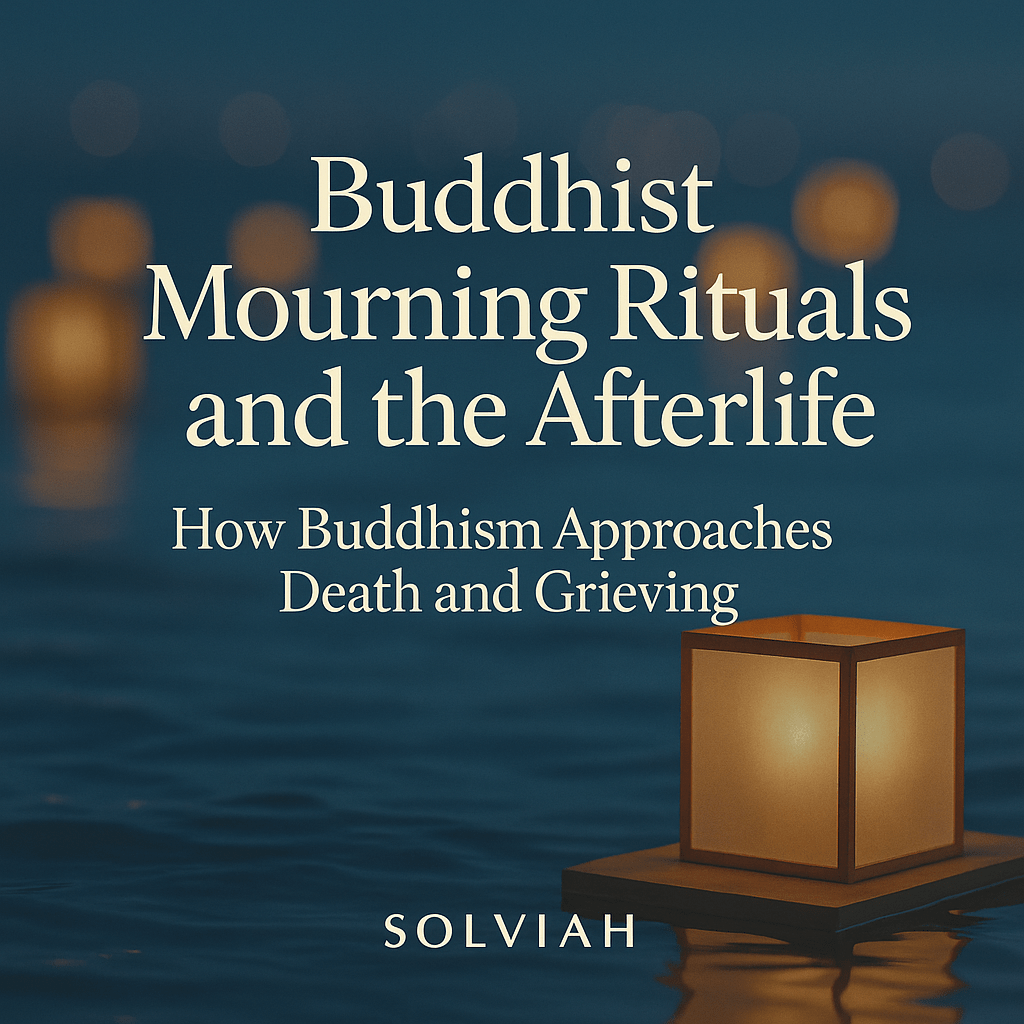
  • Buddhist Mourning Rituals and the Afterlife: How Buddhism Approaches Death and Grieving

    Buddhist Mourning Rituals and the Afterlife: How Buddhism Approaches Death and Grieving

    As dusk falls on the Obon Festival in Japan, hundreds of paper lanterns float across rivers and seas. Each small light carries the memory of a loved one — a glowing symbol of love, loss, and hope guiding the spirits home.

    In Buddhism, death is not seen as a final ending, but as a natural transformation — a continuation of life’s ever-changing flow. While Buddhist cultures often speak of rebirth, it’s important to know: Buddhism doesn’t demand blind belief. Instead, it focuses on truths every grieving person understands — that life is fragile, change is constant, and compassion eases sorrow. Whether or not we believe in reincarnation, Buddhist traditions offer something profoundly human: a way to honor grief without rushing it, and a way to remember with love instead of despair.


    Mourning Rituals in Buddhist Cultures

    Across Buddhist societies — from Thailand to Tibet to Japan — mourning is woven into daily life with rituals that honor both the dead and the living.

    Clothing: Mourners traditionally wear white garments, symbolizing purity and peace. In Tibetan and Japanese customs, darker or muted clothing expresses humility and respect without deepening sorrow.

    Food and Offerings: Families prepare vegetarian meals and present them at family altars or temples. In Tibetan Buddhism, butter lamps are lit, and prayers are recited from the Bardo Thodol (Tibetan Book of the Dead), a guide for the soul navigating the bardo — the 49-day transition between death and rebirth.

    Time Frames: Mourning often spans 49 days, during which families gather regularly to chant, meditate, and offer merit. Compassionate remembrance supports both the departed and those left behind.


    How Buddhist Cultures Embrace Grief Differently

    In many Western cultures, grieving tends to be private and time-limited. There is often an unspoken expectation to “move on” quickly and return to normalcy.

    Grieving in Buddhism is sacred. Mourning is communal, open, and welcomed. Rituals extend over weeks, offering mourners a way to stay connected to their loss, not push it away.

    “Grief is not a problem to fix; it is a sacred path to walk.”

    Instead of “getting over it,” Buddhist traditions teach people to move with grief — carrying sorrow with compassion as a natural part of life’s journey.


    Buddhist Teachings That Offer Comfort

    At the heart of Buddhist grieving practices are timeless teachings that speak to all who mourn:

    • Impermanence (Anicca): Everything changes — life, sorrow, seasons of the heart.
    • Compassion (Karuna): Loving-kindness softens even the sharpest pain.
    • Mindfulness (Sati): Presence with grief — without judgment — allows healing to emerge naturally.

    “Even sorrow changes. Even sorrow blooms.”

    Whether or not we embrace samsara (the cycle of rebirth), grieving in Buddhism shows that compassionate remembrance transforms suffering into sacred memory.


    Reflection: What We Can Learn About Grief, Healing, and Legacy

    Buddhist traditions remind us that grief is not weakness. It is the echo of love.

    By embracing impermanence, making space for memory, and trusting compassion, we create legacies that outlast sorrow — legacies built on love, remembrance, and hope.


    Gentle Ways to Remember Loved Ones, Inspired by Buddhist Traditions

    • Light a candle daily and offer a simple blessing of peace.
    • Create a small remembrance space at home — a photo, a flower, a keepsake.
    • Spend five minutes each day reflecting with gratitude and gentleness.
    • Write a letter or prayer and place it near water, a tree, or a favorite natural place.

    We’d Love to Hear From You

    Your story matters. Your memories matter. Share your reflections in the comments — because together, we carry love forward.

    For further reading, see the references listed at the end of this article.


    Explore More

    References

    • Karma-glin-pa. (2006). The Tibetan Book of the Dead: The Great Liberation Through Hearing in the Bardo. Shambhala Publications.
    • Becker, C. B. (1992). Buddhist Views of Death and Their Implications for Contemporary Society. Death Studies, 16(2), 181–191.
    • Rosenblatt, P. C. (2008). Grieving Across Cultures: A Review and Research Agenda. Bereavement Care, 27(3), 47–50.
    • Thera, N. (1998). The Heart of Buddhist Meditation. Samuel Weiser, Inc.

    Note: Buddhist mourning practices vary across traditions (Theravāda, Mahāyāna, Vajrayāna) and regions. This article reflects widely practiced cultural approaches but may not represent all sects or communities.