Calm the Panic: A Gentle Introduction
When a loved one dies, you are suddenly faced with both grief and a long list of urgent tasks. The immediate hours and days after a death can feel like a blur. If you’re wondering what to do when someone dies, or how to write an obituary during this emotional time, you’re not alone.
This article is your calm companion during chaos, providing a gentle, detailed walkthrough of how to write an obituary step-by-step, and offering a helpful death checklist to guide you through the first steps after death. Use it as a practical tool and share it with others who may be walking the same road.
Immediate Death Checklist: First Steps After a Death
Before writing the obituary, there are urgent steps you’ll need to take. Here’s a simplified death checklist:
Step 1: Confirm and Document the Death
- At home: Call the hospice nurse or family doctor (if expected), or emergency services (if unexpected).
- At a hospital or care facility: Staff will typically handle this step and issue a medical certificate of death.
Step 2: Contact a Funeral Director
Choose a reputable funeral home or director who can help with body transportation, service planning, and publishing the obituary.
Step 3: Inform Immediate Family
Call or text close family members before anything goes public. Gently coordinate who else will be informed and by whom.
Step 4: Secure the Deceased’s Property and Pets
Lock their home, retrieve valuables, and ensure pets or plants are cared for.
Step 5: Locate Key Documents
Look for the will, funeral instructions, or prepaid burial/cremation agreements. You may also need access to ID, insurance, and legal documents soon.
Writing the Obituary: Step-by-Step Instructions
Writing an obituary is your opportunity to honor a life. It also helps notify the community and provide details about memorial services. Here’s a compassionate, step-by-step guide:
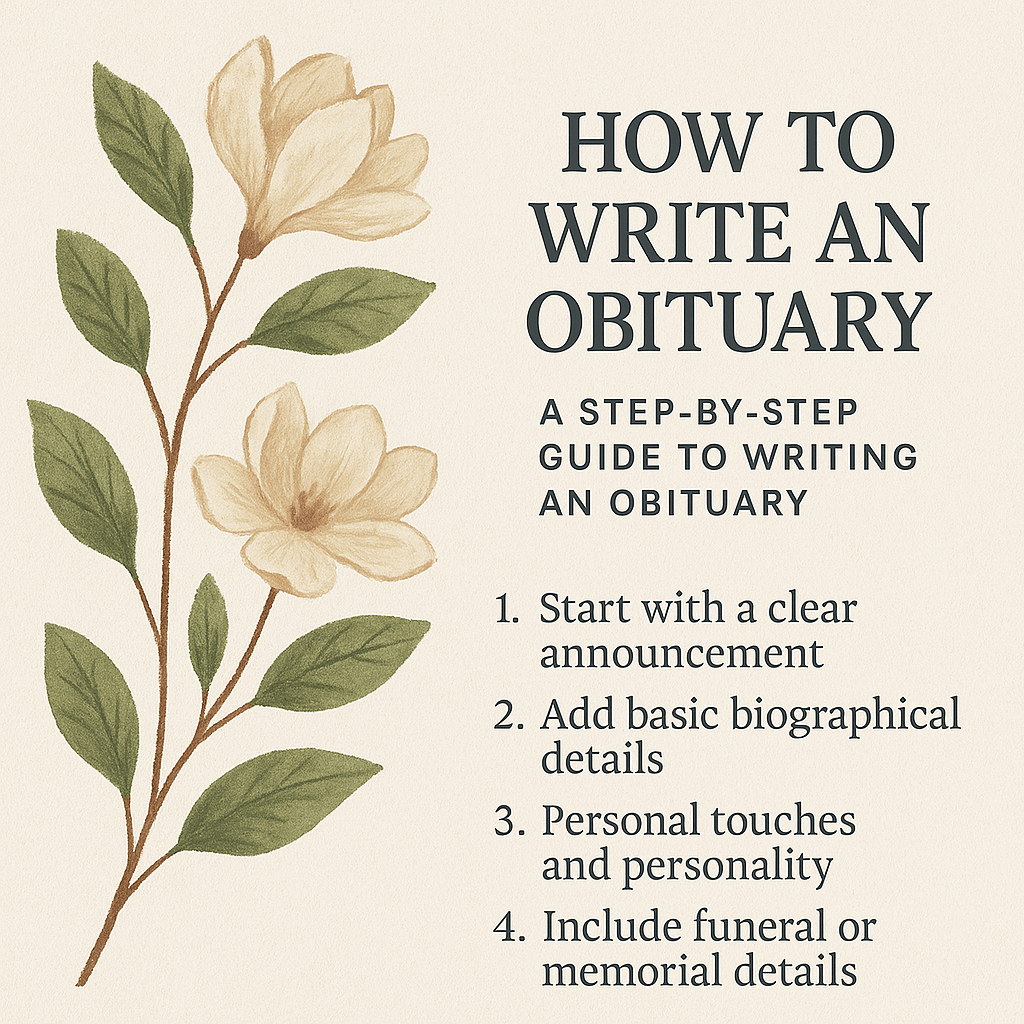
1. Start with a Clear Announcement
Use a respectful, direct sentence:
“Elizabeth Mary Thompson, 78, of Denver, Colorado, passed away peacefully on March 30, 2025.”
2. Add Basic Biographical Details
- Date/place of birth
- Parents’ names (if relevant)
- Education or career highlights
- Achievements, hobbies, or roles in the community
3. Personal Touches and Personality
Highlight what made them special:
“A passionate gardener and avid storyteller, Elizabeth filled her home with laughter and lilacs. She loved mentoring young teachers and never missed a grandchild’s soccer game.”
4. List Immediate Family Members
Example:
“She is survived by her daughter, Rachel; her son-in-law, Marco; two grandchildren, Liam and Ava; and her brother, James.”
And optionally:
“She was preceded in death by her husband, Paul, and her sister, Margaret.”
5. Include Funeral or Memorial Details
Add date, time, location, and whether the public is invited. Include streaming info or donation suggestions if relevant.
6. End With Appreciation or Legacy
Example:
“Her strength, kindness, and humor touched everyone she met. Her family invites you to celebrate her legacy with stories, joy, and remembrance.”
Sample Obituary Template
John Robert Edwards, 68, passed away peacefully on April 1, 2025, surrounded by loved ones in Baltimore, Maryland. Born August 2, 1956, John was a devoted father, skilled carpenter, and Army veteran. He is survived by his wife, Dana; children, Lisa and Jared; and three grandchildren. He was preceded in death by his parents, George and Lillian. A memorial service will be held at Oak Grove Chapel, 11 a.m. on Saturday, April 6. In lieu of flowers, donations can be made to the Wounded Warrior Project.
FAQs: Common Questions Families Ask
Do I need a death certificate to write an obituary?
No, but you will need the legal pronouncement of death from a doctor or coroner for funeral arrangements and death registration.
How long should an obituary be?
Most are 150–300 words. Newspapers often charge by length. Online obituaries can be longer and include photos.
Should I mention cause of death?
Only if the family is comfortable. Many families choose to say “passed away peacefully” or “after a long illness.”
Can I publish an obituary later?
Yes. You can also write a short public announcement first and a fuller obituary later. It’s okay to grieve and take your time.
Resources for Help and Guidance
United States
United Kingdom
Canada
Australia
Conclusion: Remembering with Grace
Writing an obituary may be one of the most emotional things you’ll ever do. But it can also be a sacred moment—honoring a life, comforting others, and anchoring your own grief in meaningful reflection.
Bookmark or share this list with someone who might need it. One day, it may bring someone comfort, clarity, and a sense of calm when they need it most.
References
- Cruse Bereavement Support. (2023). What to do when someone dies. Retrieved from https://www.cruse.org.uk
- Funeral Consumers Alliance. (2022). How to write a great obituary. Retrieved from https://www.funerals.org
- National Hospice and Palliative Care Organization. (2023). First steps after a death. Retrieved from https://www.nhpco.org
 Solviah