Honoring Life, Embracing Memories

Tag: culture mourning rituals

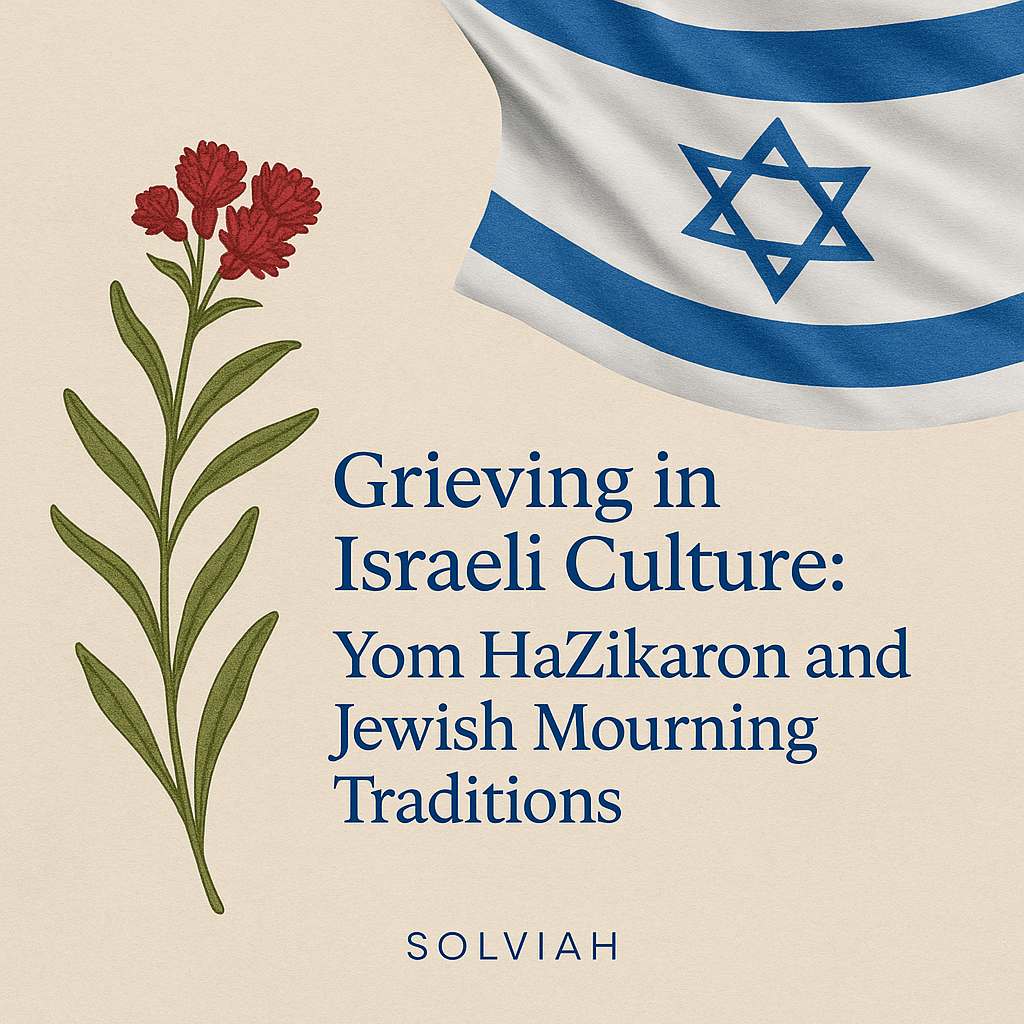
  • Grieving in Israeli Culture: Yom HaZikaron and Jewish Mourning Traditions

    Grieving in Israeli Culture: Yom HaZikaron and Jewish Mourning Traditions

    “We will never forget you. We will never cease to mourn you. We will never let you down.”

    — Official Yom HaZikaron Memorial Message, State of Israel

    In Israel, remembrance is not an afterthought—it is a national rhythm. Yom HaZikaron, the Day of Remembrance for Fallen Soldiers and Victims of Terror, opens a sacred space where grief is both national and deeply personal.

    ⬆️ Back to Top

    A Nation Paused: Sirens, Stillness, and Spring Air

    At 8:00 p.m., a siren rings out across Israel for one minute. Cars stop. People stand. Silence falls.
    The next morning, a two-minute siren at 11:00 a.m. begins official ceremonies across the country.

    The Red Everlasting flower, Dam HaMaccabim, adorns graves and lapels, symbolizing remembrance and sacrifice.

    ⬆️ Back to Top

    Jewish Mourning Traditions Within an Israeli Frame

    • Ner Zikaron: Memorial candles lit in homes and cemeteries.
    • Kaddish/Yizkor: Prayers recited to honor the dead.
    • Food: Dishes like lentil soup and round challah reflect Jewish mourning symbols.
    • Dress: Modest or subdued clothing shows solidarity and grief.

    ⬆️ Back to Top

    Today’s Israel: Grief Amid War and Trauma

    Following the October 7th attacks and ongoing conflict, Yom HaZikaron in 2025 carries new weight. It’s no longer just memorial—it’s therapy.
    It’s survival. Families grieve fresh wounds alongside generational ones.

    ⬆️ Back to Top

    How to Support from Afar

    • Observe moments of silence during Israel’s sirens.
    • Attend virtual memorials or share reflections online.
    • Reach out to Israeli friends or Jewish communities.
    • Educate yourself and others with resources like For Supporters & Friends.

    ⬆️ Back to Top

    A Sacred Transition: From Mourning to Joy

    At sundown, Yom HaZikaron ends and Yom HaAtzmaut begins. Fireworks replace tears. This contrast is intentional—a national expression of resilience.

    ⬆️ Back to Top

    What Can This Culture Teach Us?

    Grief in Israeli culture teaches us that mourning can be a communal act. That sorrow remembered can birth strength. And that the past lives in us when we choose to carry it forward.

    ⬆️ Back to Top

    Join the Conversation

    Have you participated in Yom HaZikaron? How does your culture honor its fallen? Share your experience in the comments.

    ⬆️ Back to Top

    Glossary

    • Yom HaZikaron: Israeli Memorial Day
    • Yom HaAtzmaut: Israeli Independence Day
    • Ner Zikaron: Memorial candle
    • Kaddish/Yizkor: Jewish mourning prayers
    • Shiva/Shloshim/Yahrzeit: Jewish grief periods
    • Dam HaMaccabim: Red Everlasting flower of remembrance

    ⬆️ Back to Top

    Sources (APA Style)

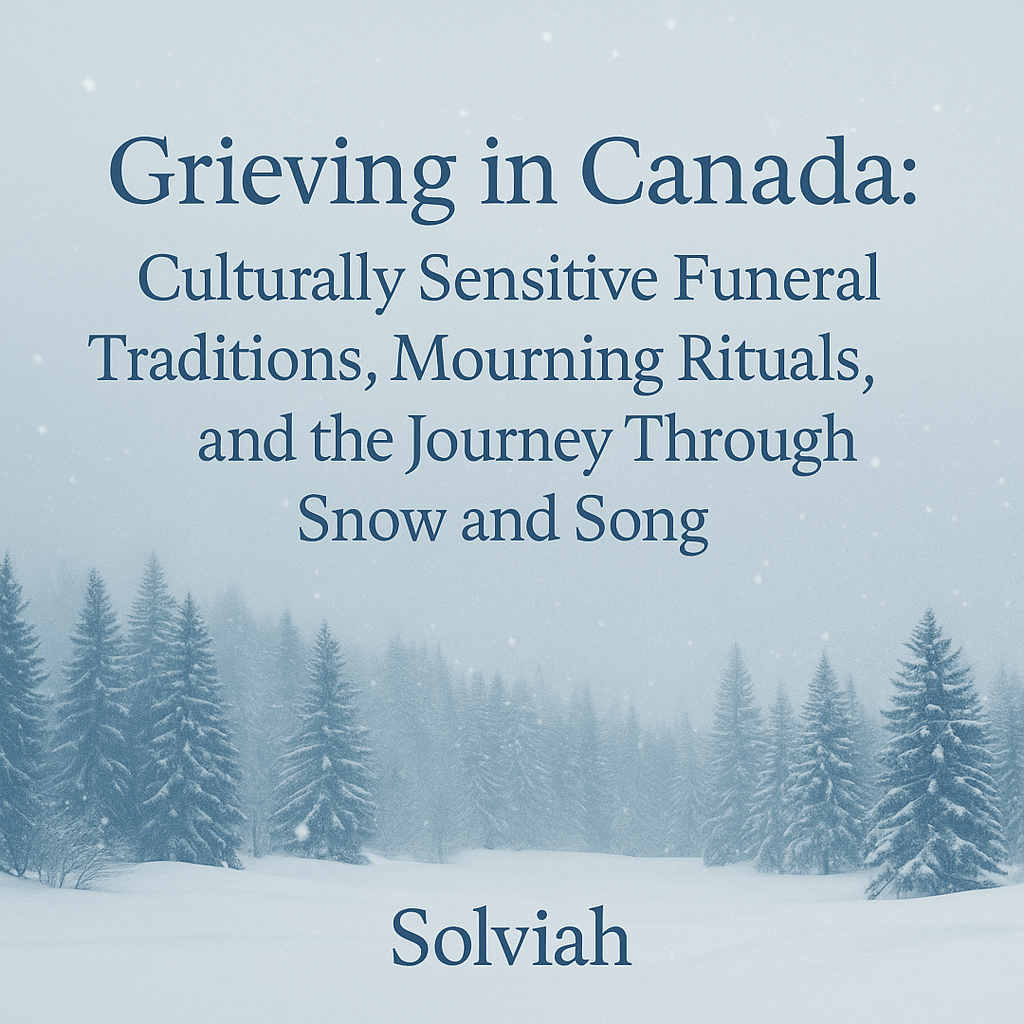
  • Grieving in Canada: Culturally Sensitive Funeral Traditions, Mourning Rituals, and the Journey Through Snow and Song

    Grieving in Canada: Culturally Sensitive Funeral Traditions, Mourning Rituals, and the Journey Through Snow and Song


    “When the drumbeat stops, the spirit walks on.”

    — Haudenosaunee (Iroquois) Proverb

    Across Canada’s vast, snowy landscapes, death is not seen as an ending, but as a continuation — a step into a living memory that shapes those left behind.

    To grieve in Canada is to feel the cold air bite your cheeks, to wrap grief in warmth and ceremony, and to honor the unbroken thread between the living and the dead.


    A Winter’s Mourning: A Sensory Journey ❄️

    Picture this:

    The snow crunches underfoot as mourners gather around a firepit near a longhouse. Their breath curls into the icy air. A woman wearing a hand-beaded shawl carefully adds cedar to the fire, its sweet smoke spiraling skyward. Nearby, elders ladle venison stew into wooden bowls, the rich aroma mingling with the crispness of the winter wind.

    Someone begins to drum — slowly, steadily — and the gathering hums with a sound older than memory. Here, mourning is not silence. It is story. It is song. It is survival.

    🔝 Back to Top


    Mourning Rituals in Canada: Clothing, Foods, Seasons, and Sacred Space

    Indigenous Traditions: Grieving With the Land

    For many Indigenous Canadians, mourning honors not just the person lost but the land they return to.

    • Clothing: Handmade garments adorned with shells, beadwork, and spiritual symbols.
    • Food: Bannock, smoked meats, berries, and cedar tea nourish body and spirit alike.
    • Seasons: Winter burials may be delayed, with ceremonies unfolding when the earth softens.

    “We live in cycles. Death is part of that circle. We mourn, we remember, and then we walk with our ancestors inside us.”

    — Louise McDonald, Cree Elder

    Large communal events like the Feast of the Dead (Wikipedia Contributors) strengthen the bond between generations.


    French-Canadian Mourning: Faith, Family, and Familiarity

    In Québec, Catholic traditions blend with resilient warmth:

    • Wakes: Two days of prayer, stories, and shared meals in homes or parlors.
    • Foods: Tourtière (savory meat pie), maple treats, hearty soups.
    • Emotion: Open weeping and laughter are both welcome, affirming life’s bittersweetness.

    Multicultural Mourning Across Modern Canada

    Today’s Canada embraces traditions from across the world:

    • Indian-Canadian families honor loved ones with marigold garlands and cremation ceremonies.
    • Caribbean-Canadians celebrate vibrant Nine-Night wakes with music and food.
    • Chinese-Canadians offer incense, fruits, and whispered prayers to ancestors.

    🌿 Learn more about emotional healing after loss.

    🔝 Back to Top


    Communal Grieving in Canada: Weathering Loss Together

    In Canada, grief is held collectively, like logs stacked together to keep the fire burning through winter.

    Indigenous Sała ceremonies (U’mista Cultural Society) gather entire villages for drumming, dance, and storytelling. In cities, multicultural memorials blend traditions, creating tapestries of prayer, song, and comfort.

    🤝 Supporting a grieving friend? Find resources here.

    🔝 Back to Top


    Comparing Mourning: Canada and Western Traditions

    Unlike Western funerals often limited to short ceremonies, Canadian mourning stretches into seasons, blending ritual, food, memory, and music. Here, grief is honored in all its forms — a dance of silence, storytelling, and remembrance.

    🔝 Back to Top


    Reflection: What Canadian Mourning Traditions Teach Us 🌿

    From the heavy stillness of winter air to the vibrant dance of multicultural celebrations, Canada teaches that:

    • Grief is a season, not a sentence.
    • Memory is not a weight — it is a torch.
    • The soul continues — through every shared story and act of remembrance.

    When the drumbeat stops, the spirit does not disappear.
    It walks onward — carried in our kindness, our songs, and the gentle footsteps we take in their honor.

    🔝 Back to Top


    Join Our Healing Circle 🌟

    We invite you to share your own experiences with mourning traditions, seasonal memories, or reflections below.

    Tell us about a song, a meal, a gathering — a moment when memory carried you forward.
    Your story could become someone else’s light in the snow.

    🔝 Back to Top


    Glossary 📖

    Term Meaning
    Feast of the Dead Huron-Wendat communal reburial ceremony honoring ancestors.
    Sała Ceremony Kwakwaka’wakw mourning gathering with storytelling and dance.
    Nine-Night Caribbean mourning tradition spanning nine nights of remembrance.
    Tourtière French-Canadian savory meat pie, common at wakes and celebrations.

    🔝 Back to Top


    References 🔖

    • Earle Waugh. (2010). Funeral Practices in Canada. The Canadian Encyclopedia.
    • St. John’s Dixie Cemetery. (n.d.). Canadian Funeral Customs and Traditions.
    • Wikipedia contributors. (n.d.). Huron Feast of the Dead. Wikipedia.
    • Louise McDonald, Cree Elder. (n.d.). Personal commentary.

    🕯️ Part of the Solviah Reflection Series 🕯️