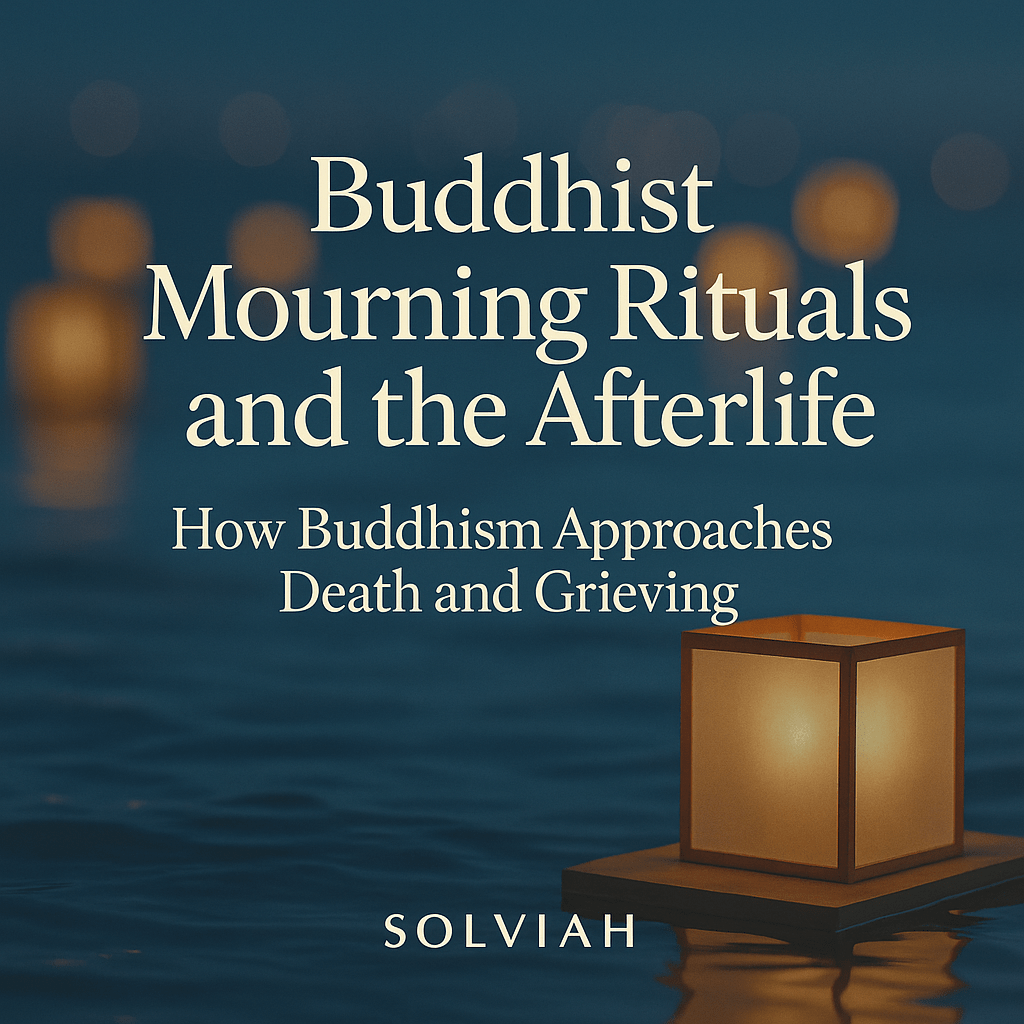
As dusk falls on the Obon Festival in Japan, hundreds of paper lanterns float across rivers and seas. Each small light carries the memory of a loved one — a glowing symbol of love, loss, and hope guiding the spirits home.
In Buddhism, death is not seen as a final ending, but as a natural transformation — a continuation of life’s ever-changing flow. While Buddhist cultures often speak of rebirth, it’s important to know: Buddhism doesn’t demand blind belief. Instead, it focuses on truths every grieving person understands — that life is fragile, change is constant, and compassion eases sorrow. Whether or not we believe in reincarnation, Buddhist traditions offer something profoundly human: a way to honor grief without rushing it, and a way to remember with love instead of despair.
In This Article: Gentle Explorations of Grief and Healing
Mourning Rituals in Buddhist Cultures
Across Buddhist societies — from Thailand to Tibet to Japan — mourning is woven into daily life with rituals that honor both the dead and the living.
Clothing: Mourners traditionally wear white garments, symbolizing purity and peace. In Tibetan and Japanese customs, darker or muted clothing expresses humility and respect without deepening sorrow.
Food and Offerings: Families prepare vegetarian meals and present them at family altars or temples. In Tibetan Buddhism, butter lamps are lit, and prayers are recited from the Bardo Thodol (Tibetan Book of the Dead), a guide for the soul navigating the bardo — the 49-day transition between death and rebirth.
Time Frames: Mourning often spans 49 days, during which families gather regularly to chant, meditate, and offer merit. Compassionate remembrance supports both the departed and those left behind.
How Buddhist Cultures Embrace Grief Differently
In many Western cultures, grieving tends to be private and time-limited. There is often an unspoken expectation to “move on” quickly and return to normalcy.
Grieving in Buddhism is sacred. Mourning is communal, open, and welcomed. Rituals extend over weeks, offering mourners a way to stay connected to their loss, not push it away.
“Grief is not a problem to fix; it is a sacred path to walk.”
Instead of “getting over it,” Buddhist traditions teach people to move with grief — carrying sorrow with compassion as a natural part of life’s journey.
Buddhist Teachings That Offer Comfort
At the heart of Buddhist grieving practices are timeless teachings that speak to all who mourn:
- Impermanence (Anicca): Everything changes — life, sorrow, seasons of the heart.
- Compassion (Karuna): Loving-kindness softens even the sharpest pain.
- Mindfulness (Sati): Presence with grief — without judgment — allows healing to emerge naturally.
“Even sorrow changes. Even sorrow blooms.”
Whether or not we embrace samsara (the cycle of rebirth), grieving in Buddhism shows that compassionate remembrance transforms suffering into sacred memory.
Reflection: What We Can Learn About Grief, Healing, and Legacy
Buddhist traditions remind us that grief is not weakness. It is the echo of love.
By embracing impermanence, making space for memory, and trusting compassion, we create legacies that outlast sorrow — legacies built on love, remembrance, and hope.
Gentle Ways to Remember Loved Ones, Inspired by Buddhist Traditions
- Light a candle daily and offer a simple blessing of peace.
- Create a small remembrance space at home — a photo, a flower, a keepsake.
- Spend five minutes each day reflecting with gratitude and gentleness.
- Write a letter or prayer and place it near water, a tree, or a favorite natural place.
We’d Love to Hear From You
Your story matters. Your memories matter. Share your reflections in the comments — because together, we carry love forward.
For further reading, see the references listed at the end of this article.
Explore More
References
- Karma-glin-pa. (2006). The Tibetan Book of the Dead: The Great Liberation Through Hearing in the Bardo. Shambhala Publications.
- Becker, C. B. (1992). Buddhist Views of Death and Their Implications for Contemporary Society. Death Studies, 16(2), 181–191.
- Rosenblatt, P. C. (2008). Grieving Across Cultures: A Review and Research Agenda. Bereavement Care, 27(3), 47–50.
- Thera, N. (1998). The Heart of Buddhist Meditation. Samuel Weiser, Inc.
Note: Buddhist mourning practices vary across traditions (Theravāda, Mahāyāna, Vajrayāna) and regions. This article reflects widely practiced cultural approaches but may not represent all sects or communities.
 Solviah