Category: Library
-
Grief and Celebration on Yom HaAtzma’ut: Israeli Mourning Traditions in a Time of War
What Yom HaAtzma’ut Feels Like
In early May, spring is in bloom across Israel. Hillsides are painted in red poppies and yellow wildflowers. The air carries warmth — perfect for outdoor gatherings — and streets fill with the smell of grilled meats and the hum of music.
Families head to parks, beaches, and nature trails with Israeli flags in hand. They barbecue, sing, laugh, and rest.
But beneath the celebration is a shared understanding: we are only here because others are not.
“Before we started the mangal,” says Orna, whose son fell in combat last year, “we lit a candle and set a plate for him. Then we played his favorite song. We smiled through tears. That’s how we carry him.”
Today’s Yom HaAtzma’ut: Grief in a Time of War
This year, Yom HaAtzma’ut arrives during a deeply painful time. The ongoing war and the presence of hostages have reshaped the emotional tone of the holiday.
- Some celebrations have been canceled or scaled back.
- Ceremonies include silence for the hostages and fallen soldiers.
- Families of the kidnapped often mourn and protest rather than celebrate.
Even for those not directly affected, the mood is heavier. Flags still wave, grills still light, but the songs are softer. Joy feels complicated — and that’s okay.
Mourning Practices Around Yom HaAtzma’ut
Because Yom HaAtzma’ut follows Yom HaZikaron, many families shift quickly from grief to celebration — a cultural and emotional pivot few outsiders can understand.
On Yom HaZikaron, candles are lit, cemeteries are visited, and national radio airs personal stories. The entire country stands still during the siren. Then, at sundown, Yom HaAtzma’ut begins.
At the national torch-lighting ceremony on Mount Herzl, thirteen citizens are chosen each year to light torches. In 2024, several were lit in honor of hostages and fallen first responders.
Many families continue their remembrance with a lit candle, a prayer, or a shared story before festivities begin.
What Can Friends and Supporters Do?
- 🕯️ Acknowledge both holidays
- 💬 Reach out with empathy
- 👂 Offer presence, not platitudes
- 🫶 Support verified causes like hostagesandmissingfamilies.org
Your presence and words, even from afar, can bring deep comfort.
A Word from Solviah to the Griever
To the one celebrating with a shadow over your heart —
To the one who lights a candle before you light a grill —
To the one who watches the fireworks through quiet tears —We see you. We honor you. You are not alone.
At Solviah, we believe grief is not something to “get over.” It’s something to carry with care. And this Yom HaAtzma’ut, we carry it with you.
Zikhronam livrakha
May their memory be a blessing.Glossary
- Yom HaAtzma’ut: Israeli Independence Day
- Yom HaZikaron: Memorial Day for fallen soldiers and victims of terror
- Mangal: Traditional Israeli outdoor barbecue
- Hostages: Individuals kidnapped during war or terror attacks
- Diaspora: Jewish communities outside Israel
- Zikhronam livrakha: Hebrew for “May their memory be a blessing”
References
- Ben-Yehuda, N., & Mishali-Ram, M. (2006). The commemoration of Israeli soldiers in public rituals and sites. Memory Studies, 1(2), 123–136.
- Rosenblatt, P. C. (2017). Grief across cultures. In Stroebe, M., Schut, H., & van den Bout, J. (Eds.), Handbook of Bereavement Research and Practice (pp. 207–222). American Psychological Association.
- Israel Ministry of Foreign Affairs. (n.d.). Yom HaZikaron and Yom HaAtzma’ut: National Commemoration and Celebration. Retrieved from gov.il
- Goodman, Y. (2010). Military, memory, and the politics of mourning in Israel. Ethos, 38(4), 369–389.
Grieving in Israeli Culture: Yom HaZikaron and Jewish Mourning Traditions
Table of Contents
“We will never forget you. We will never cease to mourn you. We will never let you down.”
— Official Yom HaZikaron Memorial Message, State of Israel
In Israel, remembrance is not an afterthought—it is a national rhythm. Yom HaZikaron, the Day of Remembrance for Fallen Soldiers and Victims of Terror, opens a sacred space where grief is both national and deeply personal.
A Nation Paused: Sirens, Stillness, and Spring Air
At 8:00 p.m., a siren rings out across Israel for one minute. Cars stop. People stand. Silence falls.
The next morning, a two-minute siren at 11:00 a.m. begins official ceremonies across the country.
The Red Everlasting flower, Dam HaMaccabim, adorns graves and lapels, symbolizing remembrance and sacrifice.
Jewish Mourning Traditions Within an Israeli Frame
- Ner Zikaron: Memorial candles lit in homes and cemeteries.
- Kaddish/Yizkor: Prayers recited to honor the dead.
- Food: Dishes like lentil soup and round challah reflect Jewish mourning symbols.
- Dress: Modest or subdued clothing shows solidarity and grief.
Today’s Israel: Grief Amid War and Trauma
Following the October 7th attacks and ongoing conflict, Yom HaZikaron in 2025 carries new weight. It’s no longer just memorial—it’s therapy.
It’s survival. Families grieve fresh wounds alongside generational ones.
How to Support from Afar
- Observe moments of silence during Israel’s sirens.
- Attend virtual memorials or share reflections online.
- Reach out to Israeli friends or Jewish communities.
- Educate yourself and others with resources like For Supporters & Friends.
A Sacred Transition: From Mourning to Joy
At sundown, Yom HaZikaron ends and Yom HaAtzmaut begins. Fireworks replace tears. This contrast is intentional—a national expression of resilience.
What Can This Culture Teach Us?
Grief in Israeli culture teaches us that mourning can be a communal act. That sorrow remembered can birth strength. And that the past lives in us when we choose to carry it forward.
Join the Conversation
Have you participated in Yom HaZikaron? How does your culture honor its fallen? Share your experience in the comments.
Glossary
- Yom HaZikaron: Israeli Memorial Day
- Yom HaAtzmaut: Israeli Independence Day
- Ner Zikaron: Memorial candle
- Kaddish/Yizkor: Jewish mourning prayers
- Shiva/Shloshim/Yahrzeit: Jewish grief periods
- Dam HaMaccabim: Red Everlasting flower of remembrance
Sources (APA Style)
- Masa Israel Journey. (2023). Yom HaZikaron. https://www.masaisrael.org/yom-hazikaron-israel-memorial-day/
- Wikipedia contributors. (2025). Yom HaZikaron. https://en.wikipedia.org/wiki/Yom_HaZikaron
- JNS.org. (2025). ‘Every day is Memorial Day for us’. https://www.jns.org/every-day-is-memorial-day-for-us/
- Rabbi Sacks Legacy. (2022). Yom HaZikaron: Family Edition. https://rabbisacks.org/yom-hazikaron-family-edition/
Healing Sleep After Loss: A 7-Day Self-Care Plan for Grieving Hearts
For those struggling with rest after the death of someone they love.
It’s not just about falling asleep.
It’s the quiet ache of being awake when the rest of the world is sleeping.
It’s the weight in your body that feels too heavy to move—and too restless to still.
Grief interrupts sleep in unexpected ways. And for many, the night becomes the hardest time.
Journaling, even for a few minutes, has been shown to lower intrusive thoughts and regulate emotion, especially after trauma and loss (Pennebaker & Smyth, 2016).
Table of Contents
☁️ Day 1: Give Your Sleeplessness a Voice
You might find yourself wide awake. Scrolling. Staring at the ceiling. Listening to every sound in the room.
Do Tonight: Journal, voice memo, or whisper your thoughts aloud without judgment.
“Insomnia after loss isn’t restlessness. It’s the mind needing time to understand.”
Journal Prompt:
“What’s keeping me awake right now? If I gave that feeling a name or a sentence, what would it be?”
🧶 Day 2: Create a Grief Nest
If the rest of your space feels too big or unsettling, let this be your beginning. Your bed can become your refuge.
Do Tonight:
- Gather pillows, blankets, or familiar textures
- Place something grounding nearby: photo, stone, candle
Optional Journal Prompt:
“What does safety mean for me tonight? What textures or objects bring me ease?”
✨ Day 3: Notice the Form of Grief
Grief appears in many forms. Silent Grief: numbness, detachment. Explosive Grief: tears, pacing, shouting. Both are valid.
Do Tonight: Observe your experience without judgment.
Journal Prompt:
“Tonight, my grief feels ___. I think it needs ___.”
Based on Bonanno, 2009
⛅️ Day 4: Move Your Grief Gently
Your body holds grief. Movement can help release its weight.
Do Tonight:
- Roll shoulders (5x)
- Tilt head gently
- Forward fold with soft knees
- Child’s Pose or lie on your side
- Place hands on chest or belly, and breathe
Optional Journal Prompt:
“Where in my body do I feel the weight of grief tonight? What might help it soften?”
Sources: Hardison et al., 2005; Worden, 2018
🍃 Day 5: Give Your Brain Rest
Sometimes the most healing thing is to pause emotional work and allow peace to enter.
Do Tonight:
- Watch a calming video
- Listen to nature sounds or a bedtime podcast
- Read something light or familiar
“Grief is not all sorrow. It’s also the pause between waves.”
Journal Prompt:
“What’s one small thing I enjoyed today, even for a second?”
💤 Day 6: Connect with Memory
Connection—real or imagined—can calm grief’s sharpest edges.
Do Tonight:
- Light a candle and say their name
- Place your hand on your heart
- Write or whisper what you miss
Breathing Practice:
Inhale: “Comfort in”
Exhale: “Loneliness out”
Journal Prompt:
“If I could say one thing to you tonight, it would be… And if I could imagine your reply, it might be…”
🌌 Day 7: Begin a New Ritual
Create a gentle rhythm to return to each night. Rituals ground us.
Do Tonight:
- Light a candle
- Write one sentence in a journal
- Sip warm tea
- Place a soft item by your bed
Journal Prompt:
“What tiny ritual might help me feel steady? What do I want to bring into my nights going forward?”
🌻 Rejoice (When It Comes)
Joy is not betrayal. Rest is not disloyalty. When healing comes in waves of laughter, sleep, or relief—you are allowed to receive it.
“There is no guilt in rest. No betrayal in joy. You are allowed both.”
❤️ When to Ask for Help
If sleep remains unreachable after several weeks, or your anxiety deepens, please reach out. Grief counselors, therapists, and peer groups exist to hold space for you.
🫳️ Share With Us
Have you experienced restless nights after loss? What helped you through it?
We’d be honored to hear your story. Leave a comment below.
Your words may be exactly what someone else needs tonight.
🔗 Sources
- American Psychological Association. (2020). Grief and Loss. https://www.apa.org/topics/grief
- Bonanno, G. A. (2009). The Other Side of Sadness. Basic Books.
- Hardison, H. G., Neimeyer, R. A., & Lichstein, K. L. (2005). Behavioral Sleep Medicine, 3(2), 99–111.
- Pennebaker, J. W., & Smyth, J. M. (2016). Opening Up by Writing It Down. Guilford Press.
- Worden, J. W. (2018). Grief Counseling and Grief Therapy (5th ed.). Springer.
- Tsuno, N., Besset, A., & Ritchie, K. (2005). The Journal of Clinical Psychiatry, 66(10), 1254–1269.
How to Keep the Peace After a Death: Gentle First Steps When Family Conflict Erupts
(This article was written with enough gentleness to be shared with family.)
When the call comes — “They’re gone” — the world tilts.
Time bends strangely.
Maybe the coffee you made sits untouched. Maybe your phone buzzes with messages you can’t yet answer.
Grief moves in waves: shock, sadness, anger — sometimes all at once.
And almost immediately, tensions with family can begin to rise.
If you’re here, you’re already doing something brave.
You are reaching for peace — even while your heart is breaking.
There’s no perfect roadmap for grief. But there is a way to move forward with grace.
This guide was created tenderly, with the hope that it could serve not just you — but your whole family, if you wish to share it.
Table of Contents
• First 48 Hours After Death: A Gentle Step-by-Step
• When Family Conflict Erupts — Finding Calm in the Storm
• If You’re Feeling Lost: A Gentle Timeline
First, A Quiet Moment
When Anna’s mother died suddenly, she expected heartbreak.
She didn’t expect how quickly family arguments would start:
- Which funeral home?
- Who gets the jewelry?
- Why wasn’t I called sooner?
Through the noise, Anna made a choice:
She paused.
She breathed.
She focused on honoring her mother through peace.
You can too — one breath, one choice at a time.
First 48 Hours After Death: A Gentle Step-by-Step
Step 1: Pause. Breathe. You’re Already Doing Something Good. 🌿
Right now, you might feel broken, overwhelmed, even paralyzed.
Please hear this: You are not doing it wrong.
There’s no “correct” way to grieve.
There is only loving your loved one — moment by moment — as best you can.
Tip: Carry a small notebook or use your phone’s Notes app. In grief fog, writing things down can be a lifeline.
Step 2: Confirm the Death
Wherever your loved one passed — at home, in a hospital, in a public place — an official pronouncement is needed.
- Medical staff, if present, will handle this.
- Otherwise, call emergency services. They will guide you.
You’ll need a Pronouncement of Death for the next steps.
(Source: Hospice Foundation of America, 2023)
Step 3: Quietly Secure Personal Spaces
Gently and respectfully:
- Collect important documents
- Secure small valuables
- Arrange care for pets, plants, dependents
(Source: Hospital Bereavement Protocol, Johns Hopkins Medicine, 2022)
Step 4: Notify Close Family and Friends
You do not have to notify everyone right now. Focus on a few key people first.
“I’m heartbroken to share that [Name] has passed. We’re still gathering details. Thank you for your patience as we find our way.”
Step 5: If You’re Ready, Contact a Funeral Home
There’s no rush.
When you feel ready, call a funeral home or mortuary to arrange transport and initial care.
Important:
– You do not need all paperwork ready immediately.
– It’s okay to simply say: “I need help. I’m still gathering information.”
For more guidance, visit Funeral Planning 101.
Step 6: Begin Collecting Key Information
In the coming days, you’ll be asked for:
- Full legal name
- Date and place of birth
- Social Security number
- Veteran status
When Family Conflict Erupts — Finding Calm in the Storm
Grief can magnify everything:
- Old resentments
- Disagreements about funeral choices
- Tension over money, wills, or possessions
- Different ideas of “what [Name] would have wanted”
You are not alone.
And you are not responsible for everyone’s emotions.
A Message from Solviah to Your Family ✨
Dear Family,
This is a sacred moment.
It is not a time for rushing, blaming, or clinging to old wounds.
It is a time to honor [Name] by walking with gentleness, respect, and unity — even when it’s hard.
Every act of patience, every word of kindness, every choice to listen instead of argue becomes part of [Name]’s final legacy.
Together, you can offer a gift that will last longer than any inheritance: Peace.
Walk slowly. Walk kindly. Walk in love.
With compassion,
Solviah
If Someone Pushes or Acts Out of Greed
Some family members may:
- Push for quick decisions
- Argue over belongings
- Dismiss the need for tenderness
- Reveal old bitterness
Soft response:
“I understand everyone is grieving differently. Right now, I want to honor [Name] by moving thoughtfully. Let’s not rush important decisions.”
Or simply:
“This isn’t the time for that conversation. Let’s focus on honoring [Name] first.”
If You’re Feeling Lost: A Gentle Timeline 🕊️
If you’re wondering what to expect or when to act, here’s a soft outline to guide you through:
| Timeframe | Tasks |
|---|---|
| Hours 0–6 | Confirm death. Secure belongings. Pause and breathe. |
| Hours 6–24 | Notify immediate family. Contact a funeral home (if ready). |
| Day 2 | Meet with funeral director (if ready). Begin gathering basic information. |
| Day 3 | Focus on emotional support. Delay non-urgent disputes. Rest when you can. |
Crisis Checklist: First 3 Days
- Confirm official pronouncement of death
- Secure valuables and documents
- Notify key family and friends
- (If ready) Contact a funeral home
- Begin gathering necessary paperwork
- Protect your peace during tensions
- Eat, drink water, and sleep
- Give yourself permission to move slowly
Additional Support for You
When you’re ready, you can explore gentle resources to help you plan, heal, and honor your loved one:
A Final Word ❤️
You might feel overwhelmed.
You might feel angry, guilty, exhausted, numb — or all of these at once.
You might worry you’re not doing enough, or doing it wrong.
Please hear this: you are grieving exactly the way you need to.
There is no perfect way to lose someone you love.
There is only the next breath.
The next step.
The next small act of love.
You are enough. You are brave. And you are not alone.
Share Your Story
If you’ve walked this road — or are walking it now — your voice could be a light for someone else in the dark.
Please share your thoughts or experiences in the comments below.
Your story matters here.
Written with love by Solviah.
What to Do When Someone Dies: First 48 Hours and Creative Guest Book Alternatives for Funerals
📜 Table of Contents
- When the World Changes in an Instant
- First Steps After Death
- The “First 3 Days” Checklist
- Case Study: Her Mom Passed Unexpectedly
- Timeline: When to Do What
- Pause Here: A Moment to Breathe
- Organizing Affairs After Death
- Creative Guest Book Alternatives
- Gentle Reminder
- A Blessing for the Journey
- Share Your Heart
- Sources and Gratitude
When the World Changes in an Instant
The call came at 2:13 a.m.
“They’re gone.”
You hear it, but the world around you remains strangely intact. The toothbrush still sits by the sink. The coffee mug remains on the counter.
Everything looks the same, but nothing feels the same.
If you’re reading this, you are already doing something brave.
Pause. Breathe. ❤️
You are not doing this wrong.
This guide walks gently with you through the emotional fog and the small first steps after loss — offering comfort, clarity, and remembrance.
First Steps After Death: What Happens in the First 48 Hours
(based on Social Security Administration, hospital bereavement protocols, and hospice guidelines)
No matter where death occurs — at home, in a hospital, at work, or in public — the first steps stay rooted in respect, small actions, and breathing space.
If expected, hospital or hospice staff will assist with paperwork.
If sudden or public, emergency services and often the coroner will step in first.
First 24 Hours
- Obtain a Legal Pronouncement of Death — Needed for all steps that follow (Centers for Medicare & Medicaid Services, 2022).
- Notify Immediate Family or Trusted Friends — Start small. You don’t have to tell everyone at once.
- Secure Property and Pets — Lock the home, collect mail, arrange temporary care if needed.
The “First 3 Days” Checklist ✅
- ✅ Obtain legal death pronouncement
- ✅ Contact close family and friends
- ✅ Choose and contact a funeral home or cremation provider
- ✅ Gather documents (passport, birth certificate, will)
- ✅ Request multiple death certificates
- ✅ Secure the home, mail, pets, and valuables
Tip: If you can only complete one thing today, that is enough. You are not behind.
Case Study: Her Mom Passed Unexpectedly. Here’s What Happened Next
Anna’s mom died suddenly during a routine surgery.
At 4 a.m., Anna sat frozen in the kitchen, staring at the refrigerator, paralyzed.
“Let’s start with just one thing,” a family friend said.
“We’ll call the hospital together.”
That first call was enough. Later, they secured her mother’s home, contacted a funeral provider, and sent a group message: “Anna needs time. We’ll update you soon.”
There is no perfect way to move through this. Only your way.
Timeline: When to Do What ⏳
| Timeframe | Actions |
|---|---|
| First 12 Hours | Obtain legal death pronouncement |
| First 24 Hours | Contact immediate family/friends |
| 24–48 Hours | Arrange funeral home or cremation provider |
| By Day 2 | Notify Social Security Administration, employer, insurance |
| By Day 3 | Secure documents, finalize service or memorial plans |
✨ Pause Here: A Moment to Breathe
Place your hand over your heart.
Take one slow breath in. Hold. Release.
✨ You are doing enough. ✨
Organizing Affairs After Death: Honoring Memories
Choosing how guests share their memories is a tender decision.
A traditional guest book is a beautiful, time-honored choice.
Many families also explore creative alternatives for more personal storytelling.
Here are a few ideas — and remember, you can create whatever feels most meaningful to you.
Creative Guest Book Alternatives for Funerals and Memorials
- Memory Stones — Guests write short blessings on smooth stones to keep or plant in a memorial garden.
- Video Memory Booth — Short recorded messages collected on a simple tablet or phone.
- Fingerprint Tree — Guests add ink “leaf” fingerprints to a tree illustration for framing later.
- Memory Cards — Prompts like “I’ll always remember…” collected into a keepsake book.
- Scrapbook Station — Creative pages guests decorate with drawings, photos, or memories.
❤️ Gentle Reminder
There is no wrong way to grieve.
There is no wrong way to honor them.
Every breath you take forward weaves their memory into life.
✨ A Blessing for the Journey
May your hands find small tasks to ground you.
May your heart find small mercies to sustain you.
And may you always remember:
Love does not end here.
It carries on — through memory, through legacy, through you.
Sources and Gratitude
- Centers for Medicare & Medicaid Services. (2022). Hospice care and the end of life. cms.gov
- National Hospice and Palliative Care Organization. (2023). After a loved one dies: Helping with practical and emotional needs. nhpco.org
- Social Security Administration. (2024). What to do when a loved one dies. ssa.gov
Grieving in Canada: Culturally Sensitive Funeral Traditions, Mourning Rituals, and the Journey Through Snow and Song
Table of Contents
“When the drumbeat stops, the spirit walks on.”
— Haudenosaunee (Iroquois) Proverb
Across Canada’s vast, snowy landscapes, death is not seen as an ending, but as a continuation — a step into a living memory that shapes those left behind.
To grieve in Canada is to feel the cold air bite your cheeks, to wrap grief in warmth and ceremony, and to honor the unbroken thread between the living and the dead.
A Winter’s Mourning: A Sensory Journey ❄️
Picture this:
The snow crunches underfoot as mourners gather around a firepit near a longhouse. Their breath curls into the icy air. A woman wearing a hand-beaded shawl carefully adds cedar to the fire, its sweet smoke spiraling skyward. Nearby, elders ladle venison stew into wooden bowls, the rich aroma mingling with the crispness of the winter wind.
Someone begins to drum — slowly, steadily — and the gathering hums with a sound older than memory. Here, mourning is not silence. It is story. It is song. It is survival.
Mourning Rituals in Canada: Clothing, Foods, Seasons, and Sacred Space
Indigenous Traditions: Grieving With the Land
For many Indigenous Canadians, mourning honors not just the person lost but the land they return to.
- Clothing: Handmade garments adorned with shells, beadwork, and spiritual symbols.
- Food: Bannock, smoked meats, berries, and cedar tea nourish body and spirit alike.
- Seasons: Winter burials may be delayed, with ceremonies unfolding when the earth softens.
“We live in cycles. Death is part of that circle. We mourn, we remember, and then we walk with our ancestors inside us.”
— Louise McDonald, Cree Elder
Large communal events like the Feast of the Dead (Wikipedia Contributors) strengthen the bond between generations.
French-Canadian Mourning: Faith, Family, and Familiarity
In Québec, Catholic traditions blend with resilient warmth:
- Wakes: Two days of prayer, stories, and shared meals in homes or parlors.
- Foods: Tourtière (savory meat pie), maple treats, hearty soups.
- Emotion: Open weeping and laughter are both welcome, affirming life’s bittersweetness.
Multicultural Mourning Across Modern Canada
Today’s Canada embraces traditions from across the world:
- Indian-Canadian families honor loved ones with marigold garlands and cremation ceremonies.
- Caribbean-Canadians celebrate vibrant Nine-Night wakes with music and food.
- Chinese-Canadians offer incense, fruits, and whispered prayers to ancestors.
Communal Grieving in Canada: Weathering Loss Together
In Canada, grief is held collectively, like logs stacked together to keep the fire burning through winter.
Indigenous Sała ceremonies (U’mista Cultural Society) gather entire villages for drumming, dance, and storytelling. In cities, multicultural memorials blend traditions, creating tapestries of prayer, song, and comfort.
🤝 Supporting a grieving friend? Find resources here.
Comparing Mourning: Canada and Western Traditions
Unlike Western funerals often limited to short ceremonies, Canadian mourning stretches into seasons, blending ritual, food, memory, and music. Here, grief is honored in all its forms — a dance of silence, storytelling, and remembrance.
Reflection: What Canadian Mourning Traditions Teach Us 🌿
From the heavy stillness of winter air to the vibrant dance of multicultural celebrations, Canada teaches that:
- Grief is a season, not a sentence.
- Memory is not a weight — it is a torch.
- The soul continues — through every shared story and act of remembrance.
When the drumbeat stops, the spirit does not disappear.
It walks onward — carried in our kindness, our songs, and the gentle footsteps we take in their honor.
Join Our Healing Circle 🌟
We invite you to share your own experiences with mourning traditions, seasonal memories, or reflections below.
Tell us about a song, a meal, a gathering — a moment when memory carried you forward.
Your story could become someone else’s light in the snow.
Glossary 📖
| Term | Meaning |
|---|---|
| Feast of the Dead | Huron-Wendat communal reburial ceremony honoring ancestors. |
| Sała Ceremony | Kwakwaka’wakw mourning gathering with storytelling and dance. |
| Nine-Night | Caribbean mourning tradition spanning nine nights of remembrance. |
| Tourtière | French-Canadian savory meat pie, common at wakes and celebrations. |
References 🔖
- Earle Waugh. (2010). Funeral Practices in Canada. The Canadian Encyclopedia.
- St. John’s Dixie Cemetery. (n.d.). Canadian Funeral Customs and Traditions.
- Wikipedia contributors. (n.d.). Huron Feast of the Dead. Wikipedia.
- Louise McDonald, Cree Elder. (n.d.). Personal commentary.
🕯️ Part of the Solviah Reflection Series 🕯️
Brazilian Mourning Rituals: A Deep Guide to Grieving, Healing, and Honoring Life
“A saudade é o amor que fica.”
— Brazilian Proverb
In Brazil, love does not end at death. It lingers—like a favorite song, a familiar scent, a warm breeze—both invisible and profoundly present. This enduring connection is encapsulated in the concept of saudade, a deep emotional longing for someone beloved yet absent (1).
Funeral traditions throughout Brazil honor this truth: death is not disappearance, but transformation. Understanding how other cultures deal with death invites us to rethink our own journeys through grief with greater openness, tenderness, and resilience.
Table of Contents
- Mourning Rituals in Brazil
- Communal Grieving and Emotional Impact
- Traveling to Brazil for a Funeral
- Planning a Funeral for a Brazilian Loved One
- Ways Brazilians Honor Their Deceased
- Comparison With Western Traditions
- Reflection: What Brazil Teaches Us About Grief
- We Invite You
- Glossary
- References
Mourning Rituals in Brazil
Before exploring ceremonies of remembrance, we first step into the tender, time-honored rituals shaping Brazilian mourning.
Clothing and Symbols
Brazilian funerary customs embody a rich tapestry of Catholic, Afro-Brazilian, Indigenous, and secular traditions (2). Typically, mourners wear black to signify solemnity and respect. However, in many Afro-Brazilian practices, white garments symbolize purity, peace, and spiritual passage (3).
Tokens of remembrance—rosaries, medals of saints, fresh white flowers—are commonly placed with the deceased, reflecting both religious devotion and cultural continuity (2,4). In rural areas, widows may wear black for extended periods, sometimes up to a full year, symbolizing their enduring love and devotion (5).
Food and Fellowship
Communal meals play an important role in Brazilian mourning practices. After funeral services, families and friends gather for simple, nourishing foods such as strong coffee, fresh bread, cassava dishes, and regional favorites like pão de queijo (6). These gatherings foster connection, allowing collective grief to be expressed openly through conversation, prayer, and song.
Mourning Time Frames
- Velório (Wake): Held within 24 hours after death, featuring prayer, hymns, storytelling, and overnight presence (2,7).
- Burial: Occurs the following day with religious and cultural rites.
- Novenas: Nine consecutive days of prayer for the soul’s peace and passage (7).
- Missa de Sétimo Dia: The Seventh Day Mass marks a communal step in mourning and remembrance (7).
- Annual Memorials: Families frequently hold Masses and gatherings on death anniversaries to sustain the memory of the loved one (2).
Each rite threads sorrow into hope, reinforcing that grief, like love, continues evolving beyond the grave.
Communal Grieving and Emotional Impact
In Brazil, grief is a public, sacred act. It breathes openly through embraces, prayers, and communal presence.
At a velório (wake), tears flow freely. Friends, neighbors, and extended family gather quickly—often without formal invitation—to surround the bereaved family with solidarity (8). Open emotional expression, whether weeping, singing, or heartfelt storytelling, is both natural and culturally encouraged (9).
Children are usually included at wakes and funerals, learning that mourning is an act of love rather than something to fear (8). The communal aspect of grieving offers powerful emotional relief, reducing isolation and reinforcing collective strength.
Common condolences spoken at funerals include:
- “Meus sentimentos.” (My condolences.)
- “Sinto muito pela sua perda.” (I am sorry for your loss.)
It is not eloquent words that heal, but shared presence—shoulder to shoulder, tear to tear.
Traveling to Brazil for a Funeral
Called across oceans or continents to say goodbye? Understanding Brazilian mourning customs ensures you arrive in both heart and spirit.
| Timing | Funerals typically occur within 24–48 hours of death. Swift travel is essential (10). |
| Dress Code | Wear modest black or white clothing. Avoid flashy jewelry or bright colors (11). |
| Behavior | Emotional expression is expected. Crying, hugging, or even sobbing is seen as an act of love (8). |
| Condolences | Simple, heartfelt phrases like “Meus sentimentos” are appropriate (8). |
| Gifts | Simple white floral arrangements are welcome offerings (11). |
Even if arriving after burial, attending the Missa de Sétimo Dia (Seventh Day Mass) offers an opportunity to honor the deceased and show profound support to the grieving family (7).
Planning a Funeral for a Brazilian Loved One
In Brazil, planning a funeral is an act of immediate love and reverence. 🌿
- Timing: Funerals typically happen within 24–48 hours; rapid arrangements are critical (10).
- Funerária Coordination: Funeral homes handle caskets, transportation, permits, and church services (10).
- Religious Observances: Even secular families often hold Catholic Masses out of cultural respect (12).
- Gatherings: Post-burial meals focus on fellowship rather than formality—coffee, bread, and prayer (6).
- Ongoing Remembrance: Planning a Missa de Sétimo Dia and annual Masses sustains the legacy of love (7).
Brazilian funerals emphasize presence over perfection. The rituals are not performances—they are bridges to remembrance, healing, and hope.
Ways Brazilians Honor Their Deceased
In Brazil, remembrance is not reserved for anniversaries alone. Memory is woven into the fabric of daily life.
- Novenas: Nine days of prayer to honor and assist the soul’s journey (7).
- Missa de Sétimo Dia: A Seventh Day Mass to gather the community in shared remembrance (7).
- All Souls’ Day (Dia de Finados): On November 2nd, families visit cemeteries, light candles, and decorate graves (13).
- Memory Tables: Small altars with candles, photographs, and symbolic objects displayed at wakes or homes (14).
- Storytelling: Regular retelling of stories during family gatherings keeps the spirit of the deceased present (8).
Through ritual, prayer, and storytelling, Brazilians ensure that those who have departed continue to shape the lives of those who remain.
Comparison With Western Traditions
Though grief is universal, cultural responses to death shape how mourning unfolds. Brazil’s rituals offer contrasts—and insights—when compared with Western practices.
| Aspect | Brazil | United States/United Kingdom |
| Timing | Burial typically within 24–48 hours (10) | Burial or cremation within 3–7 days |
| Emotional Expression | Open and communal mourning (8) | Often private and restrained mourning |
| Child Involvement | Children commonly included in ceremonies (8) | Children often shielded from mourning rituals |
| Religious Influence | Catholic, Afro-Brazilian, Indigenous blends (2,3) | Primarily Christian, secular, or multicultural |
| Ongoing Remembrance | Novenas, annual Masses, All Souls’ Day observances (7,13) | Occasional memorials; less structured ongoing rituals |
Brazilian mourning traditions teach that grief can be softened—not by solitude, but by shared memory, ongoing ritual, and community presence (8).
Reflection: What Brazil Teaches Us About Grief
Grief, when embraced communally, transforms into something enduring, sacred, and tender.
Brazilian traditions reveal that grief, like love, is expansive. Through shared mourning, ongoing prayer, storytelling, and ritual, sorrow is woven into the ongoing tapestry of life rather than hidden away (1,7,8).
The concept of saudade—the beautiful ache for what is absent yet still profoundly present—teaches us that those we lose are never truly gone. They remain in every whispered prayer, every story retold, every candle lit in memory (1).
We heal through community.
We honor through remembrance.
We grieve through open, enduring love.
In this, Brazil offers a gift of wisdom: love transcends loss, and mourning is an act of continuing connection. ✨
Glossary
| Saudade | A deep emotional longing for someone who is absent but remains deeply loved. |
| Velório | An overnight wake or vigil held before a funeral in Brazil. |
| Novena | A nine-day cycle of prayers offered for the deceased’s soul. |
| Missa de Sétimo Dia | A Catholic memorial Mass held seven days after death. |
| Candomblé/Umbanda | Afro-Brazilian religious traditions blending African, Indigenous, and Catholic elements. |
| Pêsames | Portuguese term for offering condolences. |
References
- Holand I. Saudade and Cultural Identity in Brazil. Brazilian Studies Journal. 2018;34(2):45-62.
- Campos L. Death and Mourning Practices in Brazil: A Cultural Overview. J Latin Am Anthropol. 2017;22(1):113-129.
- Smith J. Religion and Ritual in Brazil. New York, NY: Routledge; 2015.
- Oliveira D. The Meaning of White in Afro-Brazilian Funeral Traditions. J Cult Stud. 2019;27(4):451-467.
- Mendes A. Mourning Customs in Brazilian Rural Communities. Soc Anthropol Rev. 2016;18(3):234-250.
- DaSilva P. Food, Memory, and Mourning: Culinary Practices After Death in Brazil. Anthropology of Food. 2020;Issue 14.
- Ferreira F. Catholic Funeral Rites and Memory Work in Brazilian Communities. J Religion Soc. 2015;17:85-98.
- Almeida S. Community Grief and Collective Healing in Brazil. Int J Cult Soc Res. 2021;29(2):122-139.
- Vargas M. Emotional Expression During Brazilian Mourning Rituals. J Contemp Ethnogr. 2020;49(3):356-379.
- Souza R. Funeral Planning in Urban Brazil: An Overview. Latin Am Mortality Stud. 2019;7(1):101-118.
- Silva B. Appropriate Conduct at Brazilian Funerals. Brazilian Cultural Notes. 2018;5(2):22-27.
- Rodrigues F. Religious Continuity in Modern Brazilian Funerary Practices. Braz J Religious Stud. 2017;12(3):78-95.
- Gomes L. Rituals of Remembrance on All Souls’ Day in Brazil. Memory Studies. 2016;9(2):205-217.
- Barbosa T. Memory Tables: Visualizing Loss in Brazilian Mourning. Vis Anthropol Rev. 2015;31(1):50-67.
- Torres A. Comparative Funeral Rites in Brazil and the West. Comparative Cultures Review. 2020;44(1):112-130.
- Johnson M. Grieving in Comparative Perspective. Cross Cult Psychol. 2019;53(4):433-450.
- Carvalho E. Saudade and Spiritual Resilience in Brazilian Catholicism. J Lat Rel Stud. 2018;25(1):59-77.
- Machado G. Annual Rituals of Mourning and Continuity in Brazil. Journal of Ritual Studies. 2017;31(2):65-81.

Signs in the Heavens: Understanding Biblical Astronomy and God’s Voice in the Stars
Table of Contents
- What Is Biblical Astronomy? (And How It Differs from Astrology)
- Scriptural Foundations for the Heavens Speaking
- The Seasons and Sacred Alignments
- 2025: A Year of Alignments, Promises, and Redemption
- When Grief or Weariness Makes the Sky Feel Silent
- God Speaks Through Wonder
- The Greatest Sign: Redemption Written Across the Heavens
- A Full Call to Salvation
- Your Next Steps
- We’d Love to Hear From You!
- Glossary
✨ What Is Biblical Astronomy? (And How It Differs from Astrology)
Biblical Astronomy is the study of the heavens — stars, planets, constellations, eclipses — through the truth of Scripture. It recognizes that the heavens serve as signposts of God’s story, pointing to His glory, His appointed times, and His promises.
Unlike astrology, which falsely teaches that stars control human destiny, Biblical Astronomy affirms that only God holds our future (Deuteronomy 18:10–12).
The stars are not gods; they are silent heralds, proclaiming the majesty of their Creator.
📖 Scriptural Foundations for the Heavens Speaking
Genesis 1:14 — “And God said, ‘Let there be lights… to serve as signs to mark sacred times, and days and years.’”
Psalm 19:1-4 — “The heavens declare the glory of God; the skies proclaim the work of His hands… Their voice goes out into all the earth.” (NIV)
Romans 1:20 — “Since the creation of the world, God’s invisible qualities — His eternal power and divine nature — have been clearly seen, being understood from what has been made.” (NIV)
Revelation 12:1 — “A great sign appeared in heaven: a woman clothed with the sun, with the moon under her feet and a crown of twelve stars on her head.” (NIV)
From beginning to end, Scripture paints the heavens as a grand canvas telling God’s unfolding story.
🌟 The Seasons and Sacred Alignments
Throughout history, celestial events have intertwined with sacred seasons, marking divine shifts and reminders:
- The Star of Bethlehem (Matthew 2)
- Blood Moon Tetrads: 1493-94, 1949-50, 1967-68, 2014-15
- The “Christmas Star” (2020)
- Great American Eclipse (2017)
- Smile in the Sky (2023)
- Full Planetary Alignment (January 2025)
- Unified Easter and Passover (April 2025)
These are only glimpses. Across time, sacred alignments have whispered God’s faithfulness to every generation.
🌌 2025: A Year of Alignments, Promises, and Redemption
2025 has already been marked by astonishing signs — a full planetary alignment, a rare unifying of Christian and Jewish holy days, and a smile in the sky.
God is speaking: “I am the God of perfect timing. My promises are sure. Redemption is unfolding.”
As major religious seasons ended and sacred alignments appeared, heaven reminds us: Our faith rests not in earthly intermediaries, but in Christ alone.
🌙 When Grief or Weariness Makes the Sky Feel Silent
Maybe you’ve had nights when sorrow weighed so heavily that you stepped outside just to breathe — and looking up, the stars seemed to draw near.
The same God who placed every star in the heavens knows your name and carries your sorrow.
Isaiah 40:26 — “Lift up your eyes and look to the heavens: Who created all these? He who brings out the starry host one by one and calls forth each of them by name.” (NIV)
Grief & Healing | For Supporters & Friends | Honoring A Life
💫 God Speaks Through Wonder
The stars sing without sound. The planets dance without words. And in every flicker across the sky, God speaks:
“I am here. I have a plan. Trust Me.”
🌟 The Greatest Sign: Redemption Written Across the Heavens
The greatest sign the cosmos has ever witnessed was the Cross.
At the crucifixion, darkness covered the land (Luke 23:44-45) — creation itself mourning as the Creator redeemed His creation.
Jesus Christ, through whom all things were made (John 1:3), laid down His life so that we might live forever with Him.
✝️ A Call to Salvation
Friend, the heavens declare it: God loves you.
But sin separates us from Him (Romans 3:23), and its penalty is death (Romans 6:23).
God’s love made a way through the Cross — a free gift of eternal life, available to all who believe (John 3:16).
A Prayer to Begin Your Journey Home:
Lord Jesus,
I believe You are the Son of God, the Maker of heaven and earth.
I believe You died on the cross for my sins and rose again.
I confess my need for Your forgiveness.
Please wash me clean and make me new.
I surrender my heart to You.
Thank You for loving me and calling me Your own.
In Jesus’ name, Amen.
🛤️ Your Next Steps
- Find a Bible-believing community.
- Read the Word daily (start with the Gospel of John).
- Pray daily and listen for God’s voice.
- Look up often — His signs still shine.
💬 We’d Love to Hear From You!
Have you ever felt God speaking to you through the stars?
Has a celestial sign brought you hope during a hard season?
Share your story in the comments below. 🌟
📚 Glossary
- Biblical Astronomy: The study of celestial bodies through the lens of Scripture, seeing them as signs of God’s glory and message.
- Astrology: A forbidden practice of seeking guidance from the stars instead of from God (Deuteronomy 18:10-12).
- Mazzaroth: The ancient Hebrew arrangement of constellations, referenced in Job 38:32.
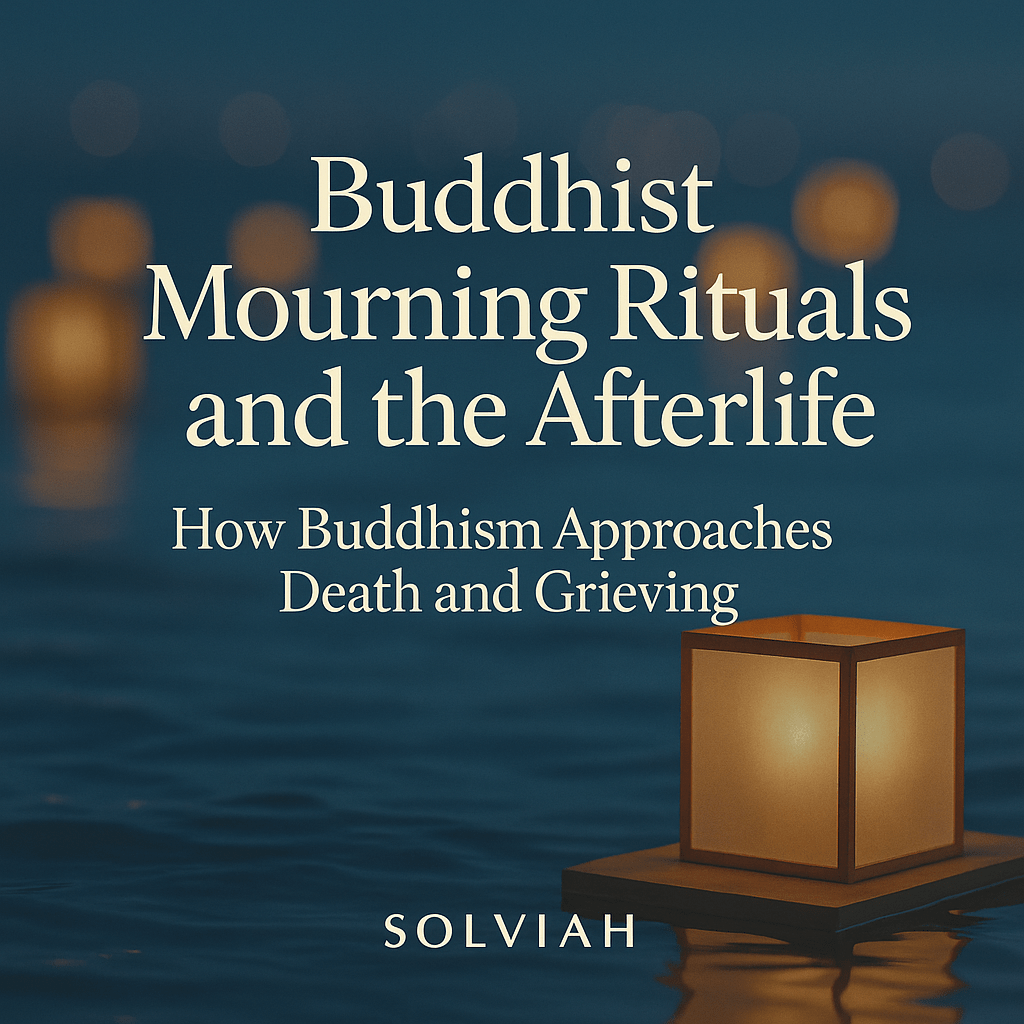
Buddhist Mourning Rituals and the Afterlife: How Buddhism Approaches Death and Grieving
As dusk falls on the Obon Festival in Japan, hundreds of paper lanterns float across rivers and seas. Each small light carries the memory of a loved one — a glowing symbol of love, loss, and hope guiding the spirits home.
In Buddhism, death is not seen as a final ending, but as a natural transformation — a continuation of life’s ever-changing flow. While Buddhist cultures often speak of rebirth, it’s important to know: Buddhism doesn’t demand blind belief. Instead, it focuses on truths every grieving person understands — that life is fragile, change is constant, and compassion eases sorrow. Whether or not we believe in reincarnation, Buddhist traditions offer something profoundly human: a way to honor grief without rushing it, and a way to remember with love instead of despair.
In This Article: Gentle Explorations of Grief and Healing
Mourning Rituals in Buddhist Cultures
Across Buddhist societies — from Thailand to Tibet to Japan — mourning is woven into daily life with rituals that honor both the dead and the living.
Clothing: Mourners traditionally wear white garments, symbolizing purity and peace. In Tibetan and Japanese customs, darker or muted clothing expresses humility and respect without deepening sorrow.
Food and Offerings: Families prepare vegetarian meals and present them at family altars or temples. In Tibetan Buddhism, butter lamps are lit, and prayers are recited from the Bardo Thodol (Tibetan Book of the Dead), a guide for the soul navigating the bardo — the 49-day transition between death and rebirth.
Time Frames: Mourning often spans 49 days, during which families gather regularly to chant, meditate, and offer merit. Compassionate remembrance supports both the departed and those left behind.
How Buddhist Cultures Embrace Grief Differently
In many Western cultures, grieving tends to be private and time-limited. There is often an unspoken expectation to “move on” quickly and return to normalcy.
Grieving in Buddhism is sacred. Mourning is communal, open, and welcomed. Rituals extend over weeks, offering mourners a way to stay connected to their loss, not push it away.
“Grief is not a problem to fix; it is a sacred path to walk.”
Instead of “getting over it,” Buddhist traditions teach people to move with grief — carrying sorrow with compassion as a natural part of life’s journey.
Buddhist Teachings That Offer Comfort
At the heart of Buddhist grieving practices are timeless teachings that speak to all who mourn:
- Impermanence (Anicca): Everything changes — life, sorrow, seasons of the heart.
- Compassion (Karuna): Loving-kindness softens even the sharpest pain.
- Mindfulness (Sati): Presence with grief — without judgment — allows healing to emerge naturally.
“Even sorrow changes. Even sorrow blooms.”
Whether or not we embrace samsara (the cycle of rebirth), grieving in Buddhism shows that compassionate remembrance transforms suffering into sacred memory.
Reflection: What We Can Learn About Grief, Healing, and Legacy
Buddhist traditions remind us that grief is not weakness. It is the echo of love.
By embracing impermanence, making space for memory, and trusting compassion, we create legacies that outlast sorrow — legacies built on love, remembrance, and hope.
Gentle Ways to Remember Loved Ones, Inspired by Buddhist Traditions
- Light a candle daily and offer a simple blessing of peace.
- Create a small remembrance space at home — a photo, a flower, a keepsake.
- Spend five minutes each day reflecting with gratitude and gentleness.
- Write a letter or prayer and place it near water, a tree, or a favorite natural place.
We’d Love to Hear From You
Your story matters. Your memories matter. Share your reflections in the comments — because together, we carry love forward.
For further reading, see the references listed at the end of this article.
Explore More
References
- Karma-glin-pa. (2006). The Tibetan Book of the Dead: The Great Liberation Through Hearing in the Bardo. Shambhala Publications.
- Becker, C. B. (1992). Buddhist Views of Death and Their Implications for Contemporary Society. Death Studies, 16(2), 181–191.
- Rosenblatt, P. C. (2008). Grieving Across Cultures: A Review and Research Agenda. Bereavement Care, 27(3), 47–50.
- Thera, N. (1998). The Heart of Buddhist Meditation. Samuel Weiser, Inc.
Note: Buddhist mourning practices vary across traditions (Theravāda, Mahāyāna, Vajrayāna) and regions. This article reflects widely practiced cultural approaches but may not represent all sects or communities.

What to Give Instead of Flowers: Meaningful Memorial Gifts That Truly Help
You want to help, but everything you say feels wrong. 💬
You scroll through sympathy cards, hover over flower delivery buttons, and type and delete messages over and over again. A friend or coworker is grieving—and you want to offer something that brings real comfort. But everything feels either too impersonal, too cheesy, or too much.
You’re not alone in this awkward, aching space. This guide will walk you through exactly what to do, what to give, what to say—and how to be the kind of presence that gently lingers after the flowers have wilted.
What Helps: Gifts That Gently Walk Beside Their Grief
Grief experts emphasize that the best support isn’t loud or flashy—it’s quiet, present, and lasting. Memorial gifts are most impactful when they help a person honor the life that was lost or gently ease the weight of daily living (Neimeyer, 2012; Doka, 2014).
Tangible Comforts
- ✉️ Handwritten letter with memories or admiration for the person who died
- 🔔 Customized keepsake (engraved wind chime, personalized candle, framed poem)
- 📖 Memory book or journal with prompts like “My favorite memory of you…”
- 🖼️ Photo album or scrapbook, digital or printed
Practical Support
- 🍲 Meal delivery gift cards or home-cooked food
- 🧹 Errand help: offer to do school pick-up, laundry, or yard work
- 🎁 Grief “comfort” basket with tea, warm socks, tissues, hand cream, and a note
Symbolic Gestures
- 🌳 Plant a tree or donate to an environmental cause in their name
- 💛 Support a cause the deceased cared about
- ⭐ Name a star, adopt a bee, or support animal sanctuaries in their memory
“Small gestures, consistently offered, create the softest landing for grief.”
Explore more in our Honoring a Life collection →
When Should You Send a Memorial Gift?
It’s never too late to be thoughtful. 🕯️
The first 3 days often bring a flood of flowers and messages—but within 3 weeks, the support fades. That’s when your gesture means the most.
- After the funeral, when silence starts settling in
- On the 1-month, 3-month, or 1-year mark
- Around holidays, birthdays, or anniversaries
- When you think of them—just because
“Grief doesn’t expire. Neither should your support.”
What to Give Based on Your Relationship
The type of gift often depends on your closeness. Here’s a guide to help:
| Relationship | Memorial Gift Ideas |
|---|---|
| Coworker / Acquaintance | Sympathy card, donation in their loved one’s name, grief book, digital gift card for meals |
| Close Friend / Family | Personal memory letter, meal train, engraved keepsake, time together doing something quiet |
| Neighbor / Community Member | Basket of snacks, offering to help with chores, drop-off meal, seasonal plant or candle |
More ideas available in our Grief & Healing section →
Culturally Aware Gift Ideas
- 🕍 Jewish: Shiva baskets (kosher only), tree planting, avoid flowers
- ⛪ Christian: Scripture prints, hymn plaques, cross jewelry (only if appropriate)
- 🛕 Hindu: Avoid meat, leather, or alcohol gifts
- ☮️ Non-religious: Neutral items like candles, cozy blankets, or memory books
- 🕌 Muslim: Avoid imagery; offer practical support or charitable donations
Learn more in our Culture & Spirituality section →
Before You Text or Visit: A Personal Checklist ✅
- Am I centering their needs, not mine?
- Have I checked their culture or preferences?
- Am I offering something specific (not just “Let me know if you need anything”)?
- Am I okay with silence, tears, or no response?
- Will I check in again weeks later?
What Hurts: Kind Intentions, Unhelpful Impact
Words or gifts intended to comfort can sometimes cause pain. (Doka, 2014)
Avoid Saying:
- “They’re in a better place now.”
- “Everything happens for a reason.”
- “At least you had time to say goodbye.”
- “I know exactly how you feel.”
Avoid Giving:
- 🚫 Strong-smelling candles or lotions
- 🚫 Religious items if you don’t know their beliefs
- 🚫 Joke gifts or spa kits too soon
“Comfort isn’t about cheering them up. It’s about holding space for their sadness.”
What to Say (and What Not to)
“I don’t know what to say” is always better than saying the wrong thing. 🤝
Phrases That Truly Help:
- “I’m so sorry. I can’t imagine what you’re going through.”
- “I don’t know what to say, but I’m here for you.”
- “Would you like me to share a memory I have of them?”
- “I’ve been thinking of you and holding you in my heart.”
- “There’s no rush to reply—I just wanted you to know I care.”
Don’t Say:
- “Time heals all wounds.”
- “Stay strong.”
- “It’s God’s plan.” (unless you’re sure it would comfort them)
The Psychology Behind Memorial Gifts
Memorial gifts support continuing bonds—the healthy, ongoing emotional connection with someone after death (Klass, Silverman & Nickman, 1996).
Grieving people don’t move on—they move forward, carrying their love with them. Memorial gestures say:
“Their life mattered. Their memory matters. I see you in your grief.”
Normalize Awkwardness: Your Support Doesn’t Need to Be Perfect
There are no magic words. You may stumble. You may cry. You may say something awkward. That’s okay. Showing up, again and again, matters most.
As Dr. Kenneth Doka wisely said:
“There are no magic words—only the healing power of compassionate presence.”
“The most meaningful gift wasn’t what she brought. It was that she stayed while I cried.”
Glossary
- Bereavement: The experience of losing someone through death.
- Grief Etiquette: Norms and sensitivities around supporting those grieving.
- Memorial Gift: A meaningful token or act given to honor someone who has died.
- Continuing Bonds: Ongoing connection to a loved one after death.
- Tangible Support: Physical help such as food, errands, or care.
Share Your Story: Has someone done something for you that truly helped during grief? Or did you find a creative way to support a friend? Share your thoughts in the comments below! ✍️
References
- Breen, L. J., & O’Connor, M. (2020). Family and social networks after bereavement: Disruption and change. Death Studies, 44(3), 145–155. https://doi.org/10.1080/07481187.2019.1574014
- Doka, K. J. (2014). Grief is a Journey: Finding Your Path through Loss. Atria Books.
- Klass, D., Silverman, P. R., & Nickman, S. L. (1996). Continuing Bonds: New Understandings of Grief. Taylor & Francis.
- Neimeyer, R. A. (2012). Techniques of Grief Therapy: Creative Practices for Counseling the Bereaved. Routledge.
 Solviah