Honoring Life, Embracing Memories

Category: Ceremony Types & Ideas

  • Burial or Cremation: How to Choose What’s Right for Your Family

    Burial or Cremation: How to Choose What’s Right for Your Family

    Burial or Cremation: How to Choose What’s Right for Your Family

    A compassionate guide for families navigating funeral choices in times of loss.

    Take a Breath
    If you’ve just lost someone, your world may feel upside down.
    Before we go any further, please pause. Breathe. You don’t need to have all the answers right now.

    A Gentle Place to Begin

    You’re not just making a logistical choice. You’re honoring a life.

    Factor Burial Cremation Green Burial / Alternatives
    Spiritual Traditional faiths Flexible, simple Naturalistic, sacred
    Emotional Place to visit Portable memorial Organic, healing
    Financial Highest cost Affordable Moderate
    Environmental Embalming/caskets Moderate impact Low impact

    Reflection Prompt: What choice brings your heart the most peace—and honors theirs?

    Burial Options

    • Traditional Burial: Casketed, interred in a cemetery.
    • Direct Burial: Simpler burial without a service.
    • Green Burial: Biodegradable and chemical-free.
    • Burial at Sea: Permitted with regulation.
    • Burial of Ashes: In urn gardens or columbarium.
    • Aquamation: Water-based cremation alternative.

    Explore: Culture & Spirituality

    Cremation Options

    Cremation can be followed by a viewing, memorial, or scattering ceremony. Families often choose it for flexibility and lower cost.

    Reflection Prompt: Would flexibility help your family gather and grieve more meaningfully?

    Cost Overview

    Service Type Average Cost (USD)
    Traditional Burial (Viewing) $7,900
    Direct Burial (No Service) $2,800
    Cremation + Memorial $5,500
    Direct Cremation $2,300

    Source: National Funeral Directors Association (NFDA, 2023)

    What If Your Family Disagrees?

    Let this article open the door to a gentle conversation. Disagreement is common and natural. Everyone grieves differently.

    Reflection Prompt: Could sharing this article help open space for compassion?

    Checklist: What to Do

    • Get death certificate
    • Check legal documents or wishes
    • Choose a provider and compare quotes
    • Decide on cremation, burial, or alternative
    • Plan memorial or service
    • Notify friends and family
    • Begin paperwork and closure tasks

    Explore: Legal & Financial

    Explore: Honoring a Life

    After the Funeral

    Allow yourself time. Time to grieve. Time to process. Time to remember.

    • Create a digital tribute
    • Plant a tree or host a second gathering
    • Begin healing with others or a counselor

    Explore: Grief & Healing

    If You’re Still Unsure, This Is Enough

    You don’t have to rush. You don’t have to get it perfect. You just have to move with love and care.

    Share this article with your family. It might be the resource that helps everyone feel heard.

    Have experience with this decision? Share your thoughts in the comments. Your story may ease someone’s burden.

    You can also send this article to your family to help make the decision together.

    Need more support?
    Explore our Funeral Planning Library for gentle, step-by-step guidance and printable tools.

    References

    • National Funeral Directors Association. (2023). 2023 Cremation & Burial Report. Retrieved from nfda.org
    • Federal Trade Commission. (2023). Your Rights Under the Funeral Rule. Retrieved from consumer.ftc.gov
    • Centers for Disease Control and Prevention. (2020). FastStats: Deaths and Mortality. Retrieved from cdc.gov
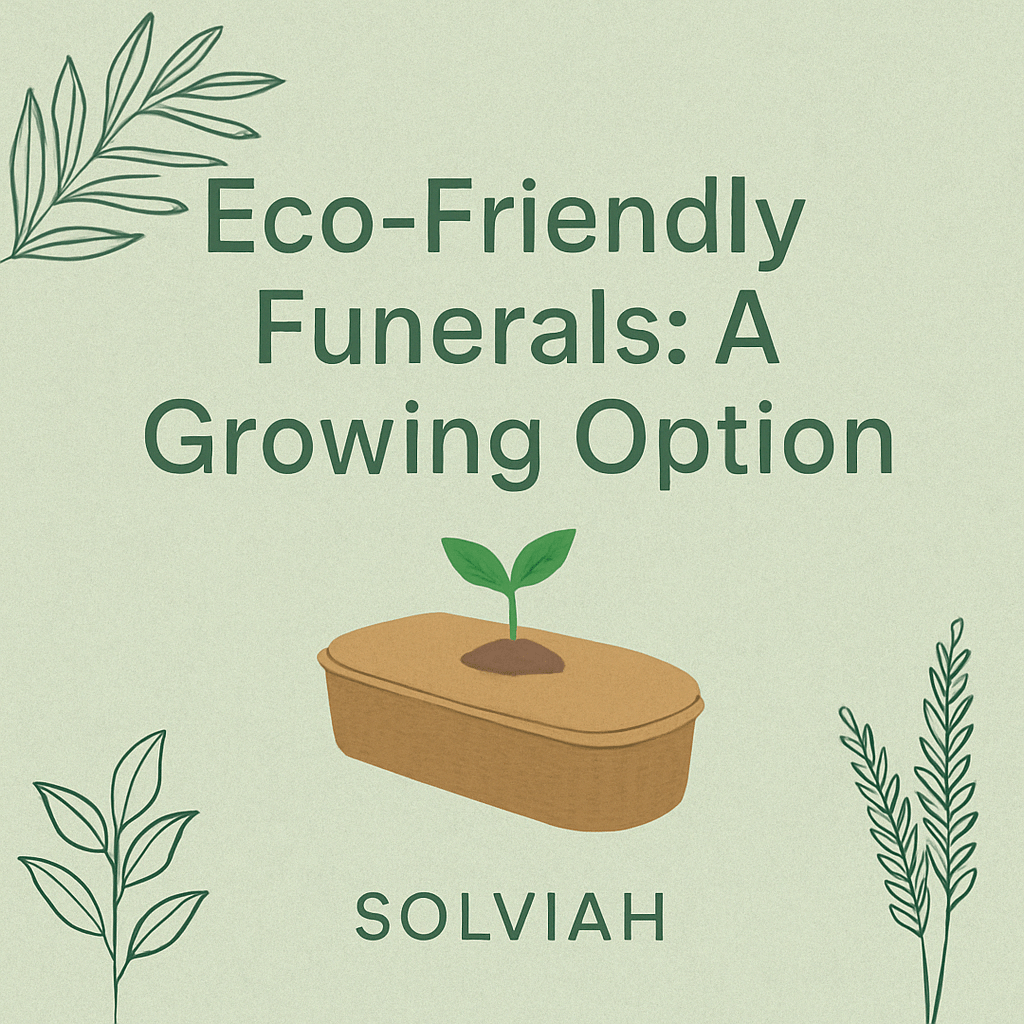
  • How to Plan an Eco-Friendly Funeral: A Gentle Guide to Green Burials and Sustainable Farewells

    How to Plan an Eco-Friendly Funeral: A Gentle Guide to Green Burials and Sustainable Farewells

    When Emily laid her mother to rest in a forest clearing, wrapped in a linen shroud and surrounded by birdsong, it didn’t feel like an ending—it felt like a return. There were no chemicals, no steel vaults. Just earth. Just love. Just legacy.

    In moments of loss, we often crave something that feels true. Something meaningful. Something that honors a life without harming the world it leaves behind. For a growing number of families, eco-friendly funerals offer just that—a natural, sacred, and sustainable way to say goodbye.


    🌿 What Is an Eco-Friendly Funeral?

    Eco-friendly—or “green”—funerals focus on minimizing environmental impact. They use natural materials, forgo harmful chemicals, and often take place in conservation areas. But more than that, they offer a way to let death be what it is: a return to the soil, not a rejection of it.

    “To the earth we belong, and to the earth we return.”
    —Adapted from Quran 2:156


    💚 Why Choose a Green Funeral?

    • Nature’s Peace: Many feel comforted by the beauty and simplicity of a burial surrounded by trees, not tombstones.
    • Spiritual Alignment: Most major faiths, including Judaism, Islam, and Christianity, allow natural burial—and many ancient traditions embraced it first.
    • Cost Consciousness: Without embalming, vaults, or ornate caskets, green funerals are often more affordable.
    • Legacy of Love: Some choose green funerals as a final act of stewardship—leaving behind healing, not harm.

    You don’t have to be an environmentalist to want a gentle goodbye.


    📝 Step-by-Step: How to Plan a Green Funeral

    Whether you’re pre-planning or honoring a loved one, this guide can help you take each step with confidence:

    Step Action Why It Matters
    1. Check Local Laws Contact your local health department or funeral board. Not all states allow burial without vaults or embalming—yet.
    2. Choose a Green Cemetery Use the Green Burial Council to find certified providers. Green sites protect wild spaces and prohibit harmful practices.
    3. Select a Natural Casket or Shroud Options include bamboo, wicker, pine, or cotton wraps. They biodegrade and nourish the earth—no metal, plastic, or varnish.
    4. Skip Embalming Choose refrigeration or dry ice instead for body preservation. Formaldehyde harms both human health and the environment.
    5. Plan a Meaningful Gathering Hold a service outdoors, in a meadow, at home, or under the stars. Simplicity can be sacred. Nature speaks when words fall short.

    💰 Funeral Costs: Green vs. Traditional

    Planning on a budget? Green funerals can be significantly more affordable. According to the National Funeral Directors Association (2023):

    • Traditional Burial: Median cost = $7,848
    • Green Burial: Often ranges between $1,500 – $4,500

    What makes the difference? You skip embalming, skip the vault, and simplify the process.

    “A simple farewell does not mean a lesser one—it means a quieter kind of beauty.”
    —Unknown


    ❗ What Most People Don’t Know (But Should)

    • Embalming is not required by law. Funeral homes must offer alternatives (FTC, 2021).
    • You can provide your own casket. Families can buy online or build one themselves.
    • Cremation isn’t the greenest option. Aquamation and human composting (where legal) have lower emissions.
    • Home burials are legal in many states. With proper permits, burial on private land is possible.

    📋 What to Ask Your Funeral Provider

    • “Can we skip embalming and use refrigeration?”
    • “Do you offer biodegradable caskets or shrouds?”
    • “Do you partner with green cemeteries or offer natural burial?”
    • “Can we hold a service at home or outdoors?”

    🌳 How Nature Helps Us Heal

    Grief can feel sharp and untamed. Yet many families say that a natural setting softened their pain. The rustling leaves, the shifting light, the scent of moss and soil—these things are not cures, but they are companions.

    To be laid to rest beneath the sky, rather than sealed away, is to invite grief into something bigger than ourselves. A cycle. A return. A hope.


    📚 References

    • National Funeral Directors Association. (2023). General Price List Median Costs. Retrieved from https://nfda.org
    • Federal Trade Commission. (2021). Complying with the Funeral Rule. Retrieved from https://www.ftc.gov
    • Centers for Disease Control and Prevention. (2022). Funeral and Burial Guidelines. Retrieved from https://www.cdc.gov
  • Understanding Different Funeral Types: A Simple Guide to Planning with Peace of Mind

    If you’re facing the loss of a loved one—or planning ahead—it’s natural to feel overwhelmed. Funeral decisions carry both emotional and practical weight. This guide is here to help. We’ll break down the most common funeral arrangements, offer clear comparisons, and walk you through what to consider. You’ll also learn how funeral costs vary by type and get step-by-step advice on how to plan a funeral that fits your needs and values.


    Quick Comparison of Common Funeral Types

    TypeIncludesBest ForEstimated Cost
    Traditional FuneralViewing, formal service, burialStructured, ceremonial goodbye$7,000–$12,000 (NFDA)
    Memorial ServiceNo body present, flexible location/timingDelayed or destination services$1,000–$5,000
    Graveside ServiceBrief ceremony at burial siteSimple, affordable, outdoors$2,000–$4,000
    Direct CremationNo service; immediate cremationBudget-conscious, minimalist option$500–$2,500
    Direct BurialImmediate burial without ceremonyFaith-based simplicity, no embalming$1,000–$3,000
    Green BurialEco-friendly, biodegradable casket or shroudEnvironmental values, natural setting$1,000–$4,000

    Step-by-Step: How to Plan a Funeral Based on Type

    1. Confirm Final Wishes (if available): Check for any pre-arrangements or stated preferences by the deceased.
    2. Choose the Type of Funeral: Use the table above to compare options. Consider emotional, cultural, and financial factors.
    3. Set a Budget: Outline how much you’re comfortable spending. Funeral homes can provide itemized cost estimates to help.
    4. Select a Funeral Home or Service Provider: Ask about services included for your chosen funeral type. Don’t be afraid to get more than one quote.
    5. Handle Legal Requirements:
      • Request multiple copies of the death certificate
      • File permits for cremation or burial
      • Notify Social Security or relevant offices
    6. Plan the Details: Customize with music, readings, speakers, photos, or religious elements. Even the simplest ceremony can be meaningful.
    7. Communicate with Loved Ones: Send out details of the service or celebration. Consider live streaming or delayed memorials for out-of-town guests.

    Expert Insights: What the Research and Industry Say

    According to the National Funeral Directors Association (2023), cremation now outpaces burial due to cost and flexibility. Meanwhile, interest in green burials is increasing as families seek environmentally conscious options (Green Burial Council, 2021).

    Studies also show that funeral rituals—no matter how simple—help with the grieving process. A direct burial or small graveside service may be just as healing as a full ceremony, depending on your values and needs (Worden, 2018).


    Legal & Logistical Tip

    Even for direct cremations, state law may require a permit or medical examiner’s approval. Always ask your provider what documentation they handle—and what falls to you.


    Bonus Tip: Consider a Delayed Memorial

    If cost or timing is a concern, you can plan a simple burial or cremation now and a memorial service later, allowing for travel or personal readiness. This flexible approach is growing in popularity.


    References

    • Funeral Consumers Alliance. (2022). Funeral prices and services explained. https://www.funerals.org
    • Green Burial Council. (2021). Guide to green burial. https://www.greenburialcouncil.org
    • National Funeral Directors Association. (2023). 2023 Cremation and Burial Report. https://www.nfda.org
    • Worden, J. W. (2018). Grief counseling and grief therapy: A handbook for the mental health practitioner (5th ed.). Springer Publishing Company.